@amvion · The Reading Desk

amvion

Highlights, Notes, short thoughts, and questions gathered while reading—a personal collection from across the Desk.

Bookmarks by amvion

Newest first
Book Highlight@amvion
And he that cannot [learn] this art, of extracting good out of evil, is to be accounted nothing. Heretofore, to enjoy beauties, and be grateful for benefits was all the art that was required to felicity, but now a man must, like a God, bring Light out of Darkness, and order out of confusion. Which we are taught to do by His wisdom, that ruleth in the midst of storms and tempests.
DIOTIMOSCenturies of MeditationsThe Fourth Century · Branch 335 · Meditation IV.21 · English
Tarot Reading@amvion
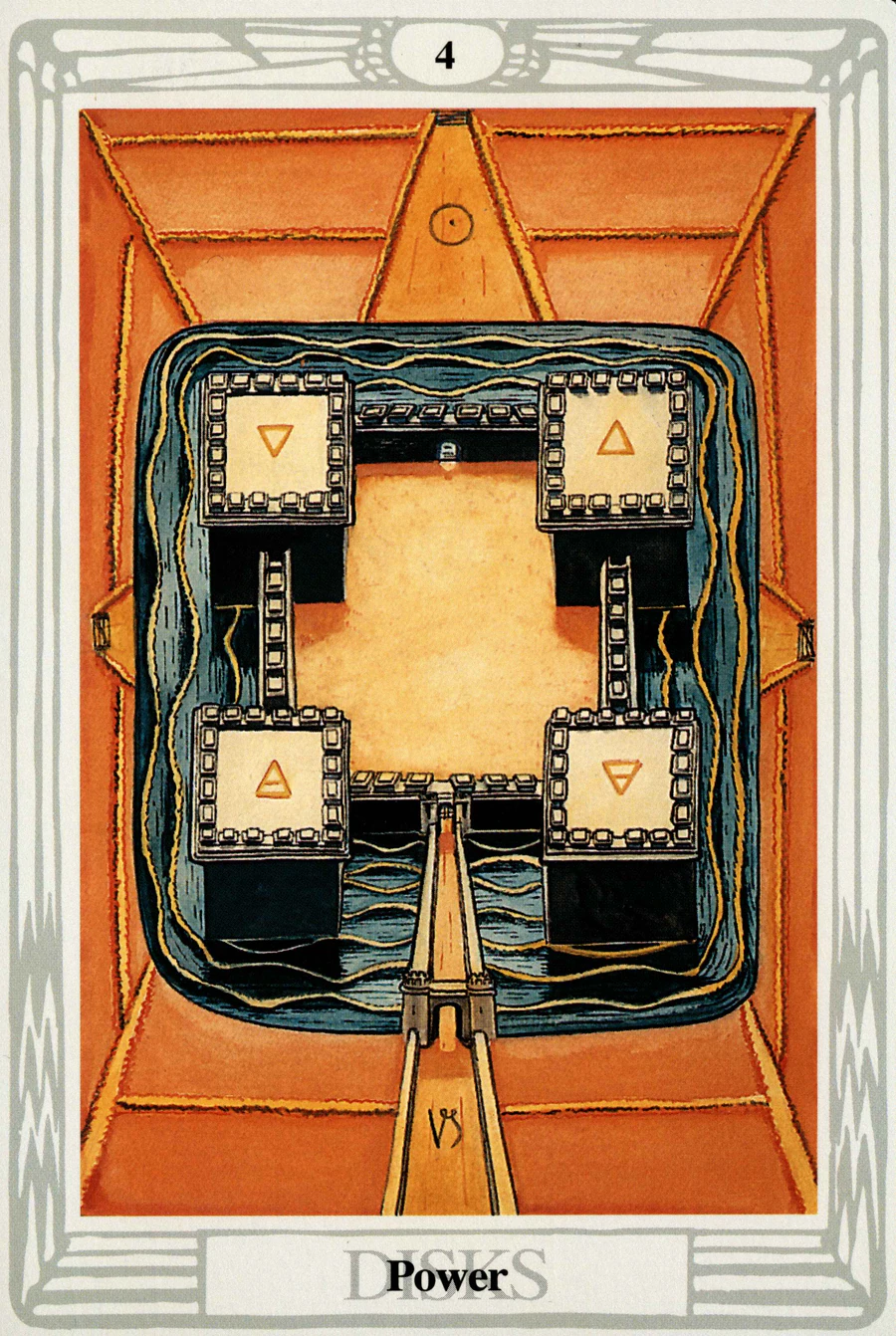
Root: Four of Disks, upright
RootFour of Disks
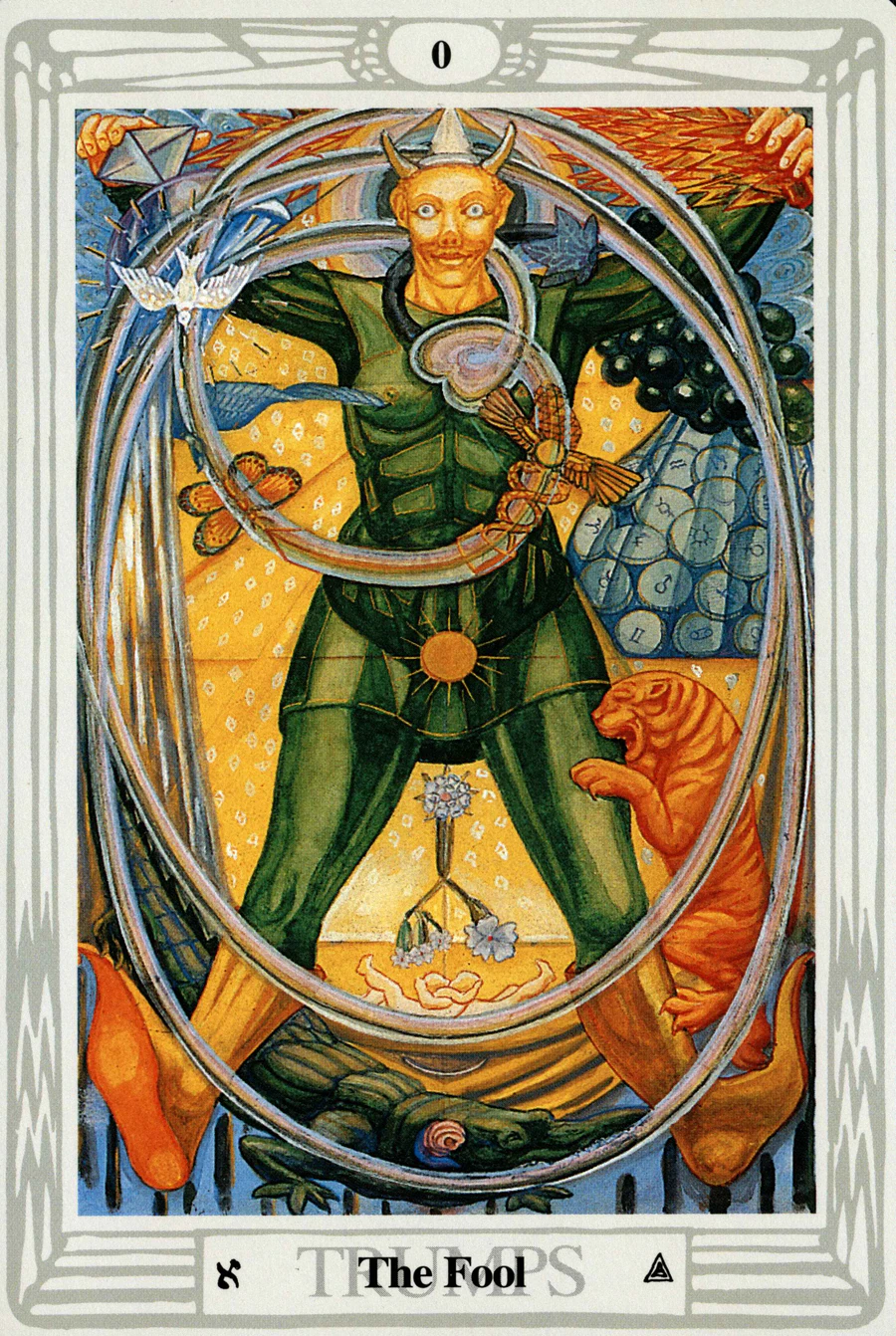
Field: The Fool, upright
FieldThe Fool
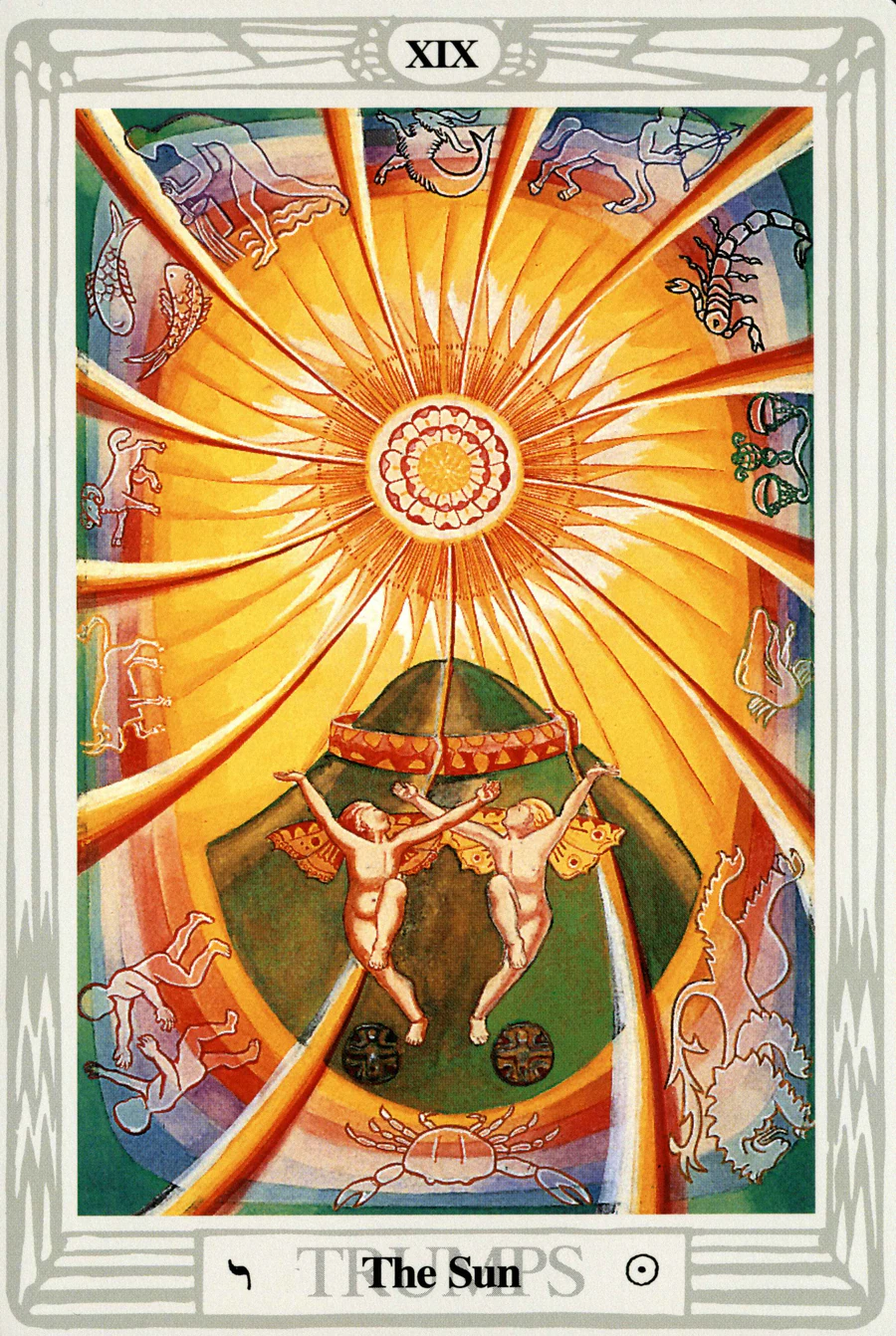
Trajectory: The Sun, upright
TrajectoryThe Sun

Reflection

Because the Four of Disks’ grip on security still shapes the situation, you are now at The Fool’s threshold of beginner’s trust, which is producing The Sun’s movement toward clarity, vitality, and visibility if nothing changes.

The Fool and The Sun make this more than a passing mood: loosening a guarded form could become a larger change in how openly you move and allow yourself to be seen.

The hinge is whether The Fool’s openness can loosen the Four of Disks’ enclosure without abandoning wise stewardship. The cards cannot decide how much security is enough; that choice determines whether the movement toward visibility feels freeing or exposed.

Tarot Reading@amvion
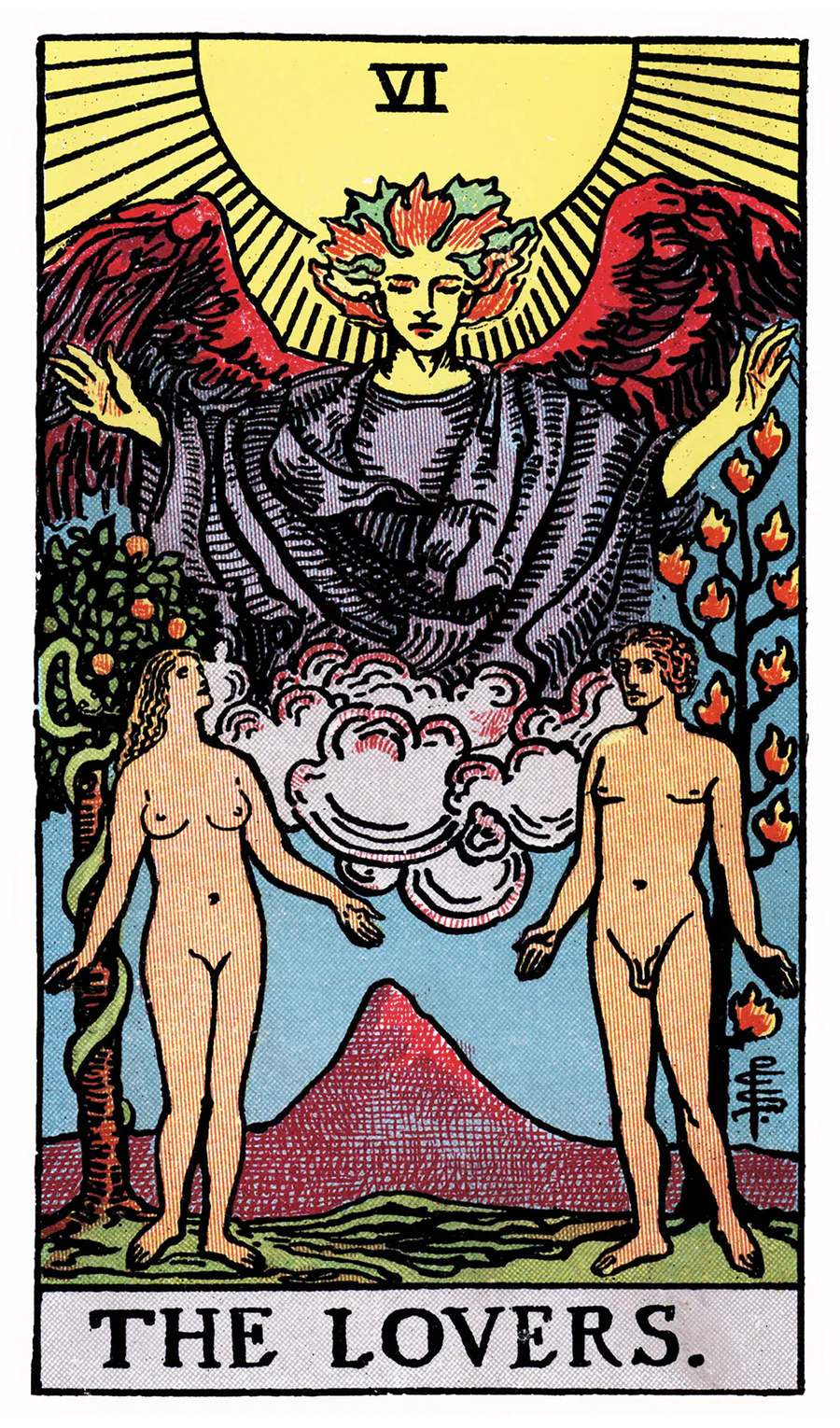
Root: The Lovers, upright
RootThe Lovers
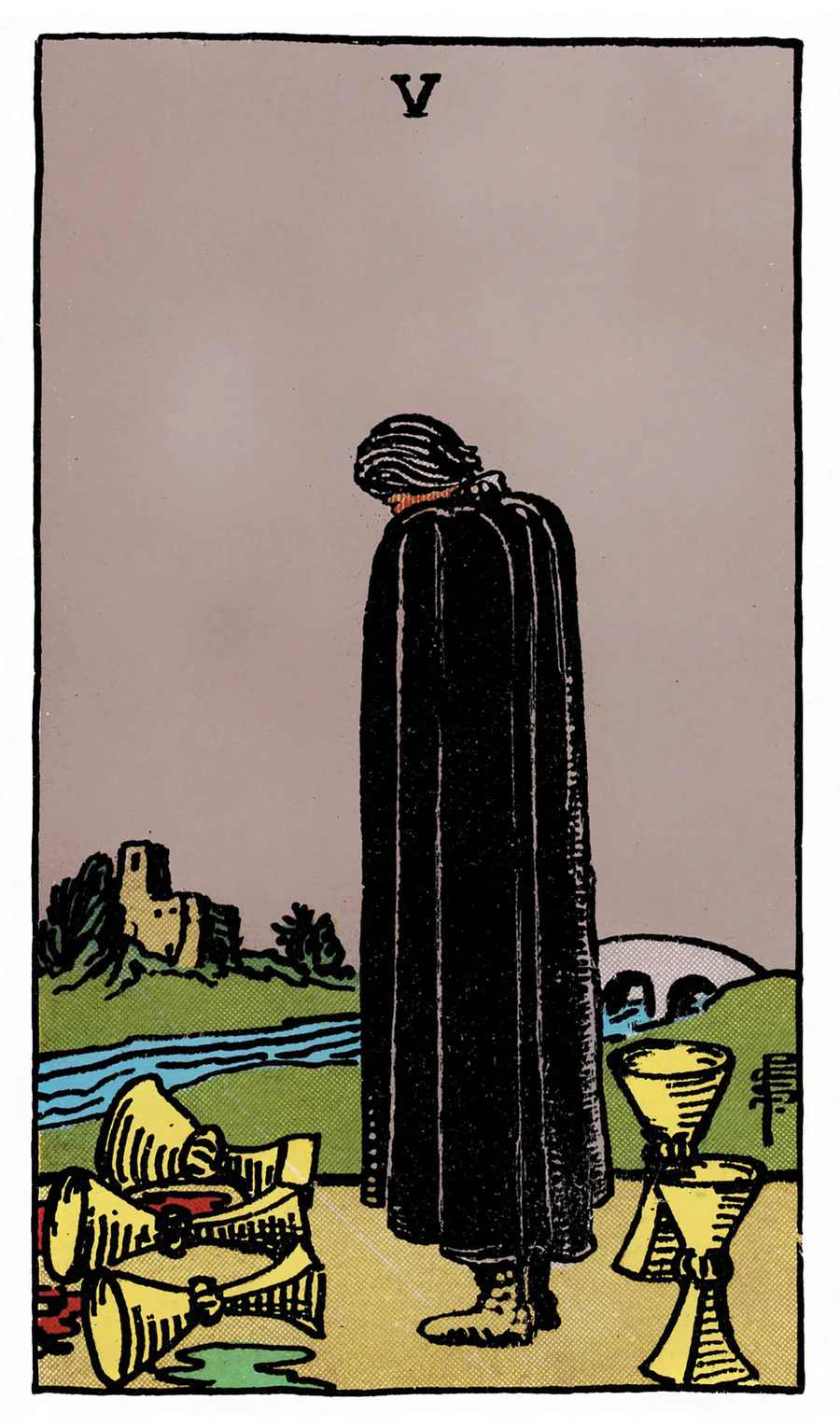
Field: Five of Cups, upright
FieldFive of Cups
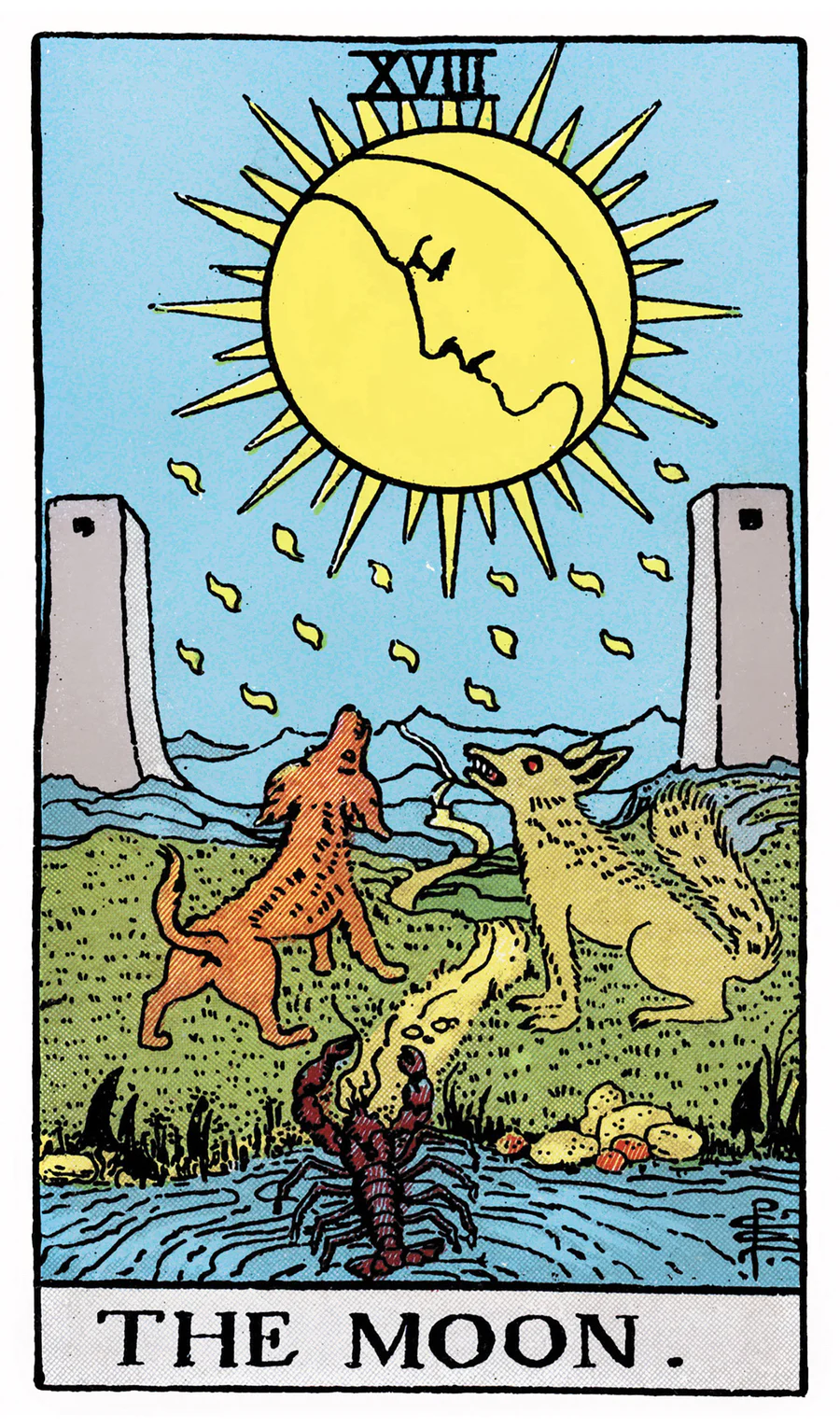
Trajectory: The Moon, reversed
TrajectoryThe MoonReversed

Reflection

Because a consequential choice about connection and values still exerts force, you are now grieving what has been lost while cautiously noticing what remains, which is producing a gradual clearing of confusion—or pressure to name a fear—if nothing changes.

The row centers the Five of Cups: The Lovers gives the loss its relational weight, while the reversed Moon suggests that feelings held in half-light may be beginning to seek language.

The hinge is whether grief can be witnessed without being made the whole story. The Five of Cups cannot decide whether what remains should be approached or released, but naming the loss may help distinguish emerging clarity from fear or projection.

Book Highlight@amvion
Then its pleasure, its rest, is a tiring debauch, brown of skin, black with blows, pale with drunkenness, or yellow with indigestion, which lasts only two days, but steals the bread of the future, the soup of the week, the wife's dresses, the child's swaddling clothes, all in rags. These men, born no doubt to be beautiful, for every creature has its relative beauty, have been regimented, from childhood, under the command of force, under the reign of the hammer, the shears, the spinning mill, and have promptly been Vulcanized.
DIOTIMOSThe Girl with the Golden EyesNovella · Branch 5 · ¶¶ 4–5 · English

Book Note@amvion
Since the very order of rational soul, holding the middle place among such levels, appears as the bond of the whole of nature—governing qualities and bodies, and joining itself to angel and to God—we shall show that it is utterly indissoluble insofar as it binds together the levels of nature; most excellent insofar as it presides over the machinery of the world; and most blessed insofar as it enters intimately into divine things.
Note

The goal of the soul is to bind the qualities (Spirit), joining itself to angel and to God.

DIOTIMOSMarsilio Ficino’s Platonic Theology, Volume IBook I · Branch 7 · §§ 5–7 · English

Highlight@amvion
(The enslaved, when freed, took on two of their former owner’s names.)Equally, it might simply reflect movement generated by marriage or business, or even personal conflict.
DIOTIMOSMissing PersonsGreg Woolf reviews Stephen L. Tuck’s Escape from Pompeii and Jess Venner’s The Lost Voices of Pompeii, arguing that both replace the romanticized image of Pompeii as a city frozen in time with a messier account of evacuation, survival, and loss. Tuck uses material evidence and names found in neighboring communities to build a cautious case that many inhabitants escaped and blended into nearby towns, although such names cannot conclusively identify refugees. Venner reconstructs seven Pompeians from inscriptions, graffiti, financial records, objects, and urban remains through “critical fabulation,” producing vivid but necessarily less secure biographies, especially of enslaved people. Together, the books suggest that leaving the city did not ensure safety: some survivors returned or resettled, while others died beyond the walls awaiting rescue.

Note@amvion

Imagine that Hephaestus’ fire is on the verge of erupting. What would the consequences be for society -- and for the individual? Would some people escape? If so, who would make it out, and what would survival even look like? Cryptic as ever, the article suggests that something may happen soon: Hephaestus’ fire could erupt, disrupting the wealthy enclaves of the world’s leaders and elites. Such an upheaval might do more than destroy the existing order -- it could redistribute power and establish entirely new structures of authority across the Earth.

DIOTIMOSMissing PersonsGreg Woolf reviews Stephen L. Tuck’s Escape from Pompeii and Jess Venner’s The Lost Voices of Pompeii, arguing that both replace the romanticized image of Pompeii as a city frozen in time with a messier account of evacuation, survival, and loss. Tuck uses material evidence and names found in neighboring communities to build a cautious case that many inhabitants escaped and blended into nearby towns, although such names cannot conclusively identify refugees. Venner reconstructs seven Pompeians from inscriptions, graffiti, financial records, objects, and urban remains through “critical fabulation,” producing vivid but necessarily less secure biographies, especially of enslaved people. Together, the books suggest that leaving the city did not ensure safety: some survivors returned or resettled, while others died beyond the walls awaiting rescue.

Highlight@amvion
When Mary asks one of them if they have the possibility of freedom, the slave responds: “If we are as good as them [their mistresses] – as fine … and as dignified – we have a right … But how are we to get to be like that?”
DIOTIMOSQueen and Games MistressEmily A. Bernhard Jackson reviews new editions of Irene Clyde’s Beatrice the Sixteenth and Susan Ertz’s Woman Alive as evidence that women and gender-nonconforming writers have a deeper history in science fiction and literary utopia than is often recognized. She finds Clyde’s women-only Armeria imaginatively and materially distinctive but fundamentally conservative, especially in its monarchy, rigid class hierarchy, child barter, and unchallenged slave labor. Ertz’s novel has a more preposterous premise—a games mistress becomes the last surviving woman and Queen of England—but Jackson argues that it succeeds through its attractive vision of technological and social reform, psychological insight, intrigue, and romance. Their republication recovers neglected feminist speculative fiction, though the two works offer sharply different social visions.

Quote@amvion

“Goodness, innocence, intent, these are things that might be more universal than we really understand. They might be something beyond human beings that can express and share those types of feelings.… We probably need to extend a welcoming embrace, because it is not going to change anything. It is not going to change the fact that they are here. They are here, whatever they are, for whatever reason they have. Probably best is just to treat them like we would treat a neighbor, would be my advice. Treat them like a good neighbor.”

Lue Elizondo · PDF Page 12-13
DIOTIMOSLue Elizondo on Security, Intent, and Non-Human IntelligenceIn an interview published on August 14, 2026, Dr. Eliot Koretney introduces Lue Elizondo as the first guest on a podcast from the Project on UAP Studies and International Security at the Ralph Bunche Institute, Graduate Center of the City University of New York. The conversation centers on the dramatic shift in U.S. government discourse around UFOs, now called UAP, especially since 2017, when figures such as Elizondo and others helped bring previously secretive government attention to the issue into public view. Koretney frames UAP through an international relations lens, especially securitization theory, asking whether UAP are moving from taboo or curiosity into an officially recognized national and international security concern. Elizondo argues that this securitization is already underway, citing reports to Congress, UAP-focused offices and programs, law enforcement and intelligence interest, taxpayer-funded investigations, and international activity involving Japan, China, Russia, Latin America, and possible United Nations-linked initiatives. The discussion broadens into UAPs as a possible non-human intelligence issue rather than merely a conventional science problem. The speakers discuss Ronald Reagan’s 1987 United Nations speech, the possibility that some presidents may have been briefed on UAP realities, and the idea that humanity often unites only when facing a shared threat. Elizondo emphasizes that advanced technologies are neither inherently good nor bad; human intent determines whether they become tools for public benefit, cooperation, arms racing, or harm. The conversation closes on the ethics of contact: UAPs may be studying humanity as humanity studies them; they appear associated with nuclear technologies and large bodies of water; aggressive attempts to lure or attack them could be dangerous; and humanity should approach unknown intelligences with caution, readiness, goodwill, love, and neighborliness.

Research Note@amvion
Research NoteRobert Bigelow’s Metaphysics of ConsciousnessI have listened to and reviewed most of the available interviews with Robert Bigelow, whose decades-long fascination with “little green men” gradually gave way to an even greater passion: understanding consciousness and whether it survives bodily death. What follows are my field notes, opening with a brief sketch of the questions that seem to drive his work and the obsessions behind his spending.

Claim@amvion
Claim

Humanity may be too spiritually immature for sustained contact—and could become “expendable”

This is Bigelow’s largest philosophical claim. He argues that technological development has drastically outpaced moral or spiritual growth, pointing to warfare, nuclear weapons, and humanity’s capacity for self-destruction. He interprets continuing anomalous encounters as a prolonged effort to make humanity aware of “something more,” while respecting human free will. His fear is that NHI could eventually decide humans are not worth engaging and simply disappear. The history of warfare supplies a real-world premise, but the ideas of spiritual eligibility, universal free will, and NHI judging humanity’s worth are metaphysical interpretations rather than empirical findings.

DIOTIMOSRobert Bigelow on UFO Gatekeepers, Disclosure, and ET CommunicationIn a discussion on August 18, 2026, Robert Bigelow and George Knapp cover a wide range of topics related to UAPs, from the decades-long government and corporate secrecy to the profound philosophical questions of communication. Bigelow argues for a pragmatic approach to disclosure, suggesting a "preemptive pardon" for the aerospace "gatekeepers" who have managed reverse-engineering programs in partnership with the government. He frames this as a national security imperative, necessary to foster cooperation and compete with adversaries like China and Russia. The conversation also explores specific phenomena at Skinwalker Ranch, which Bigelow interprets as "demonstrations" or a form of "gaming" by a non-human intelligence (NHI). These events, including cattle mutilations, the vaporization of dogs, and poltergeist-like activity, are presented as evidence of an intelligence that controls time, space, and perception, establishing rules of engagement where it is clearly in charge. The dialogue culminates in a deep dive into the feasibility and risks of communicating with these NHIs. Bigelow expresses grave concern over humanity's lack of "spiritual maturity," suggesting our species' propensity for conflict and self-destruction might make us unworthy of sustained contact. He fears that these advanced beings, who have demonstrated their trustworthiness by refraining from destroying us, might eventually "give up" on humanity and disappear -- an outcome he deems a terrible omen. The discussion touches on the recurring messages in past encounters, the dangers of using AI as an intermediary, and the universal law of free will that may prevent direct intervention. Ultimately, Bigelow concludes that while the NHIs control the engagement, it is incumbent upon humanity to elevate its collective consciousness and ethical behavior to prove we are worth the continued effort.

Note@amvion

Birch worries that river spirits and enchanted objects weaken the novel’s ecological realism, but the opposition between fact and folklore may be too simple. The river presence and the hidden child’s shoe give perceptible form to forces -- environmental agency, inherited obligations and buried memory -- that are otherwise difficult to see. The supernatural need not replace material explanations; it can express how a landscape carries histories and relationships that modern ways of thinking have ceased to recognize.

DIOTIMOSA Sense of EndingsDinah Birch reviews Melissa Harrison’s The Given World as a sombre novel about endings in Lower Eodham, an English village followed from early spring to autumn. Harrison links the inhabitants’ personal and economic losses to unstable weather, retreating wildlife, failing crops, and the decline of established rural patterns, while her knowledge of plants, animals, and agricultural labour gives the threatened landscape persuasive specificity. Birch finds this lament coherent and authoritative but argues that curses, ancestral wisdom, a river spirit, and other quasi-mystical elements distract from it. She concludes that the supernatural framing risks encouraging skeptical readers to dismiss the novel’s grounded account of damage to the English countryside as fantasy.

Highlight@amvion
When neuroscientists assess soldiers before and after deployment to a war zone, they observe changes in the architecture of their brains. Some regions of the brain physically shrink, especially those linked to memory, motivation, and threat perception. Other regions get larger or become more interconnected, such as areas involved in trauma processing. Several studies have found that many of these unconscious neural changes persist long after the soldier has left the war zone.
DIOTIMOSHard-WiredThis review argues that Nicholas Wright’s Warhead overlooks scientific evidence about the reciprocal relationship between warfare and neurobiology: studies find lasting changes in brain regions associated with memory, motivation, threat perception, and trauma among soldiers and civilian survivors, while cognitive rigidity, impulsivity, and differences in the prefrontal cortex are linked to vulnerability to extremist or authoritarian ideologies. It criticizes the book’s cheerful, admiring treatment of war and its proposal that democracies exploit “survival-grade neural machinery” to win conflicts, concluding that brain science instead shows the brain to be malleable and demonstrates that war diminishes human capacities and profoundly alters individual bodies.

Highlight@amvion
The scale of the oncoming disaster is too much for most people, who can’t “imagine beyond what they are”. And it’s not a question of intelligence. Rather, “something has stopped beating in the arteries” of the world, and the outcome is inconceivable: “when I sought to imagine something beyond it, it was still the world that I imagined. When I sought to go past it, there I found it again”. Punctuated by confusion and fear of an incomprehensible fate, Into the Sun frames the world’s end as a gentle collapse.
DIOTIMOSThe World in Gentle CollapseThis review examines Charles Ferdinand Ramuz’s novel Into the Sun, originally published in 1922 as Présence de la mort and newly translated by Olivia Baes and Emma Ramadan, in which a shift in Earth’s axis sends the planet toward the sun. It argues that the novel is both timely in its depiction of denial and profound in its reflections on nature, daily life, and humanity’s inability to comprehend catastrophe, citing the townspeople’s initially sharpened perceptions, the failure of collective action, and the descent into hysteria and violence. The review praises the translators’ rendering and retitling of the novel, concluding that it presents the end of the world as a gentle collapse marked by confusion and fear of an unimaginable fate.