
Philosophy
Would Kant's Dove Fly Better in Empty Space?
Kant’s dove shows why resistance can sustain both flight and reason.
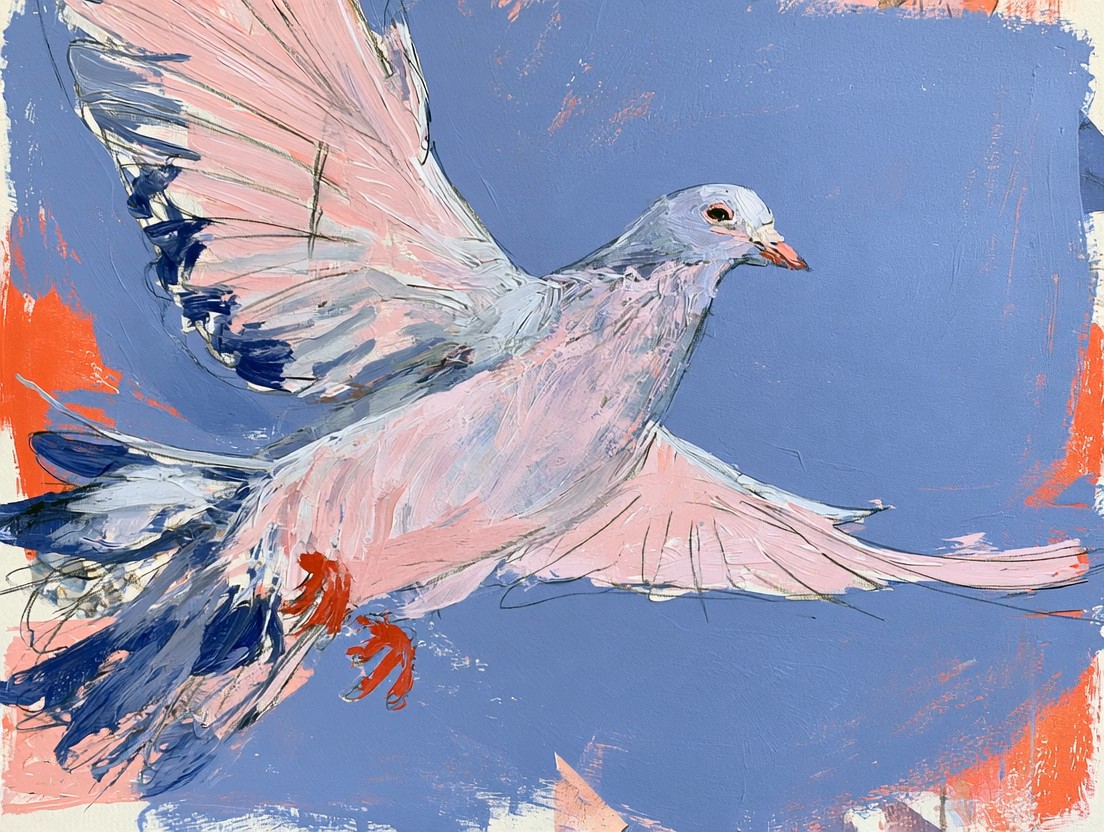
In the introduction to the Critique of Pure Reason, Kant pictures a dove that feels the air pushing against its wings and imagines it would fly better without any air at all, and says that this is what Plato did when he left the world of the senses for the world of ideas. This explainer takes the figure apart: what the dove is supposed to show about reason and experience, why the physics makes Kant's point better than Kant says, where the comparison fits Plato and where Plato had already made it himself, and how the dove became, in Wittgenstein, a philosopher on ice who wants to walk.
Orientation
At a Glance
- What the figure is forKant uses the dove to introduce the problem his whole book exists to solve.
- Where it fits, and where it breaksEvery figure deserves to be tested as a comparison, and this one fits in the respect that matters most.
- The history of the figureKant's dove has had a long flight of its own.
- The answerWould the dove fly better in empty space?
Kant is quoted from J. M. D. Meiklejohn's translation of the Critique of Pure Reason (1855), Plato from Benjamin Jowett's translations, both public domain; Wittgenstein from the Philosophical Investigations (1953), in copyright, in a single short quotation.
The figure comes early, in the third section of Kant's introduction, where he is explaining how reason gets into trouble. Mathematics, he says, has shown what thinking can do without any help from experience, and the success goes to our heads: "Deceived by such a proof of the power of reason, we can perceive no limits to the extension of our knowledge." Then the dove. "The light dove cleaving in free flight the thin air, whose resistance it feels, might imagine that her movements would be far more free and rapid in airless space." And then the name, which is the real target: "Just in the same way did Plato, abandoning the world of sense because of the narrow limits it sets to the understanding, venture upon the wings of ideas beyond it, into the void space of pure intellect. He did not reflect that he made no real progress by all his efforts; for he met with no resistance which might serve him for a support, as it were, whereon to rest, and on which he might apply his powers, in order to let the intellect acquire momentum for its progress."
The question in the headline has a plain answer, and it is the point. In empty space the dove would not fly better; it would not fly at all. There is nothing for the wing to push against, and the resistance the bird feels as an obstacle is the same air that holds it up. Kant's dove makes the mistake of thinking that what it works against is distinct from what it works with, and reason, on Kant's account, makes it too. The senses seem to limit what we can know; they are in fact the only medium in which knowledge has any lift.
What the Figure Is For
Kant uses the dove to introduce the problem his whole book exists to solve. Reason has ideas that go beyond anything experience can supply, God, the soul, the world as a whole, and it feels entitled to use them because it has watched itself succeed in mathematics, where it seemed to get knowledge out of its own head. The Critique will argue that mathematics succeeds only because its objects are constructed in the forms of our own intuition, space and time, and that the moment reason tries to fly without those forms, into "the void space of pure intellect," it goes nowhere while believing it is going fast. The dove's error is not ambition. It is a misdiagnosis of its own flight.
Kant draws the moral in the next sentence, and it is about method rather than birds: "It is, indeed, the common fate of human reason in speculation, to finish the imposing edifice of thought as rapidly as possible, and then for the first time to begin to examine whether the foundation is a solid one or no." The dove and the building are the same complaint. Metaphysics has been flying and building without first asking what carries it, and the Critique is the inquiry into the air.
Where It Fits, and Where It Breaks
Every figure deserves to be tested as a comparison, and this one fits in the respect that matters most. Resistance and support really are the same thing in flight, and Kant's claim about knowledge is exactly parallel: the sensible conditions that seem to confine the understanding are what give its concepts anything to be about. A concept without intuition, as he will say later in a sentence almost as famous as the dove, is empty. The figure also fits the psychology. A bird that has never been out of the air cannot know that the air is doing anything; it would take a vacuum to teach it, and there is no vacuum to be had. Reason is in the same position, and that is why the error is natural rather than stupid.
It breaks, or at least bends, in two places. The first is that the physics is better than Kant's prose. He says the dove "might imagine" it would fly "more free and rapid" in a void, and the reader who knows that it would simply fall supplies the conclusion; but Kant's own sentence allows the dove to be merely slower, not grounded, and his Plato correspondingly makes "no real progress" rather than none, which is softer than the image demands. The figure proves more than Kant claims from it, which is a strange fault in a comparison and worth noticing, since the stronger reading, that pure reason without sense cannot move at all, is the one Kant's book actually argues.
The second is Plato. Kant chooses wings because Plato chose them. In the Phaedrus the soul is a charioteer with winged horses, and "the wing is the corporeal element which is most akin to the divine, and which by nature tends to soar aloft"; the soul "when perfect and fully winged" "soars upward, and orders the whole world," while "the imperfect soul, losing her wings and drooping in her flight at last settles on the solid ground." Kant's dove is a reply to that picture, and a sly one: the Platonic soul wants to shed the body and rise, and Kant answers that a wing needs a body of air, and that the ground Plato's soul dreads is where it gets its purchase. But Plato was there first, in another dialogue. In the Phaedo Socrates explains that he gave up looking at things directly, "as people may injure their bodily eye by observing and gazing on the sun during an eclipse," and "I ought to be careful that I did not lose the eye of my soul"; so "I had better have recourse to ideas, and seek in them the truth of existence." That is the move Kant calls flying into the void. Yet Socrates calls it his second-best way, a precaution, a detour around a danger, and he says so with something close to apology. The Plato of the Phaedo did not imagine he would fly better without the senses. He feared he would go blind with them, and the two worries are not the same. Kant's figure captures the Platonist who thinks ideas are a shortcut; it misses the Plato who thought they were a pair of smoked glasses.
The History of the Figure
Kant's dove has had a long flight of its own. Its best-known descendant is not a bird. In the Philosophical Investigations Wittgenstein, describing what happens when philosophy demands a logic purer than any language actually has, writes: "We have got on to slippery ice where there is no friction and so in a certain sense the conditions are ideal, but also, just because of that, we are unable to walk. We want to walk: so we need friction. Back to the rough ground!" The ice is Kant's void with the ground put back in. Where the dove imagines that resistance is the enemy of motion, Wittgenstein's walker has discovered that the frictionless surface, the one that looked like the perfection of the ordinary, is where motion stops, and the cry "Back to the rough ground!" is the dove's lesson learned the hard way. The two figures are the same thought at two temperatures: Kant's is cool and corrective, Wittgenstein's is a man slipping.
Readers have also turned the dove against Kant. If the senses are the air, then the forms of intuition that Kant says we bring to experience, space and time, are a kind of air too, and one can ask whether the Critique has not built its own airless chamber, a world of appearances sealed off from things as they are; Hegel's complaint that Kant wanted to learn to swim before going into the water is a cousin of the dove, aimed back at its author. And the esoteric tradition, which has never accepted that the wings of the Phaedrus were a metaphor, simply denies the premise: for a Platonist of that kind the void is not empty, and the soul's flight is sustained by something finer than air, which the senses cannot register precisely because it does not resist them. That reading cannot be refuted from inside Kant's figure, since the figure assumes what it denies. It can only be noted that Kant's bird is a dove, the most domestic of flyers, and not an eagle or a swan.
The Answer
Would the dove fly better in empty space? No; it would drop. That is what Kant wanted the reader to see and did not quite say, and it is the whole of his quarrel with speculative metaphysics in one image: the limits reason resents are the conditions it depends on. The figure fits reason's relation to sense exactly, overstates its case against Plato, who knew the danger and chose the ideas as a shelter rather than a sky, and has gone on working in philosophers who never mention it, because the thought it carries, that what pushes back is what holds up, is one that each generation of thinkers has had to learn on its own feet. Wittgenstein's ice is Kant's void. The rough ground is the air.
Source ApparatusNotes1 note
- ↩
Kant, Critique of Pure Reason, Introduction, section III, is quoted from the translation of J. M. D. Meiklejohn (1855), Project Gutenberg ebook 4280; the passage corresponds to A5/B8–9 of the German editions. Plato, Phaedrus (the charioteer and the wing, 246–248 in the Stephanus pages), is quoted from Benjamin Jowett's translation at the Internet Classics Archive; Phaedo 99d–100a is quoted from Jowett's translation as printed at ellopos.net (Elpenor). Wittgenstein, Philosophical Investigations I §107, is quoted from the Anscombe translation as given in the SparkNotes summary of sections 92–137, which prints the passage; the book is in copyright. The modern parallels (the "empty concept" sentence, Hegel's swimmer) are noted from the author's knowledge. Modern translation recommended, in copyright: Paul Guyer and Allen Wood, Critique of Pure Reason (Cambridge, 1998), whose rendering of the dove ("airless space," "the wings of the ideas") is closer to the German than Meiklejohn's.
Test your understanding
Question 1 of 3
According to the article, what is the dove’s fundamental mistake?
Guided Inquiry
Questions for Socrates
Explore these questions with Socrates, with this Feature as your reading context.
- If resistance can be both a limitation and a source of support, how should philosophers distinguish productive constraints from constraints that merely obstruct inquiry?→
- Does the Phaedo’s portrayal of ideas as a protective detour weaken Kant’s criticism of Plato, or does it reveal a different version of the same problem? Why?→
- Can Kant consistently criticize reason for trying to leave experience while also describing space and time as forms the mind brings to experience?→