
Philosophy
I Pardon You This Time
Seneca’s nightly examination and the pardon that makes honesty possible.
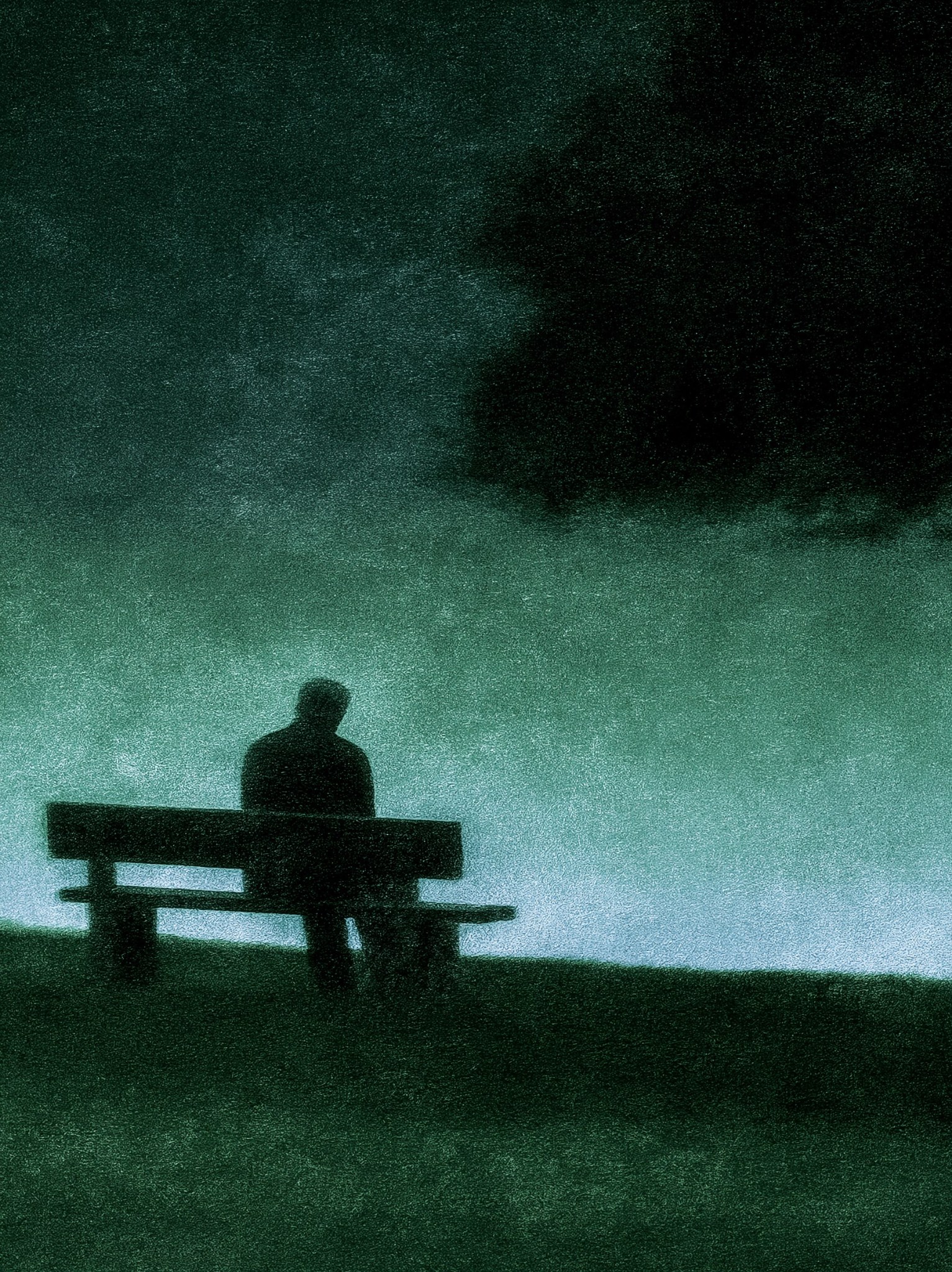
Seneca's account, near the end of his treatise on anger, of the evening examination he learned from Sextius and kept himself: three questions put to the spirit when the lamp is out, read with the sentence on the senses that precedes it, the two examples of pleading that follow it, and the older Pythagorean rule it descends from.
Orientation
At a Glance
- The passageSeneca, Of Anger (De Ira), Book III, chapter 36, translated by Aubrey Stewart (1900).
- What it says in placeOf Anger is a treatise in three books addressed to Seneca's elder brother Novatus, and it is a work of therapy rather than of theory.
- The principleThe plain level of the teaching is one anyone can verify in a week.
- The complicationThe memorable line is the verdict, "I pardon you this time," and a reader who takes it alone will think the practice gentler than it is.
The Passage
"It was the custom of Sextius when the day was over, and he had betaken himself to rest, to inquire of his spirit: 'What bad habit of yours have you cured to-day? what vice have you checked? in what respect are you better?' Anger will cease, and become more gentle, if it knows that every day it will have to appear before the judgment seat. . . . I make use of this privilege, and daily plead my cause before myself: when the lamp is taken out of my sight, and my wife, who knows my habit, has ceased to talk, I pass the whole day in review before myself, and repeat all that I have said and done: I conceal nothing from myself, and omit nothing: for why should I be afraid of any of my shortcomings, when it is in my power to say, 'I pardon you this time: see that you never do that anymore?'"
Seneca, Of Anger (De Ira), Book III, chapter 36, translated by Aubrey Stewart (1900).
What It Says in Place
Of Anger is a treatise in three books addressed to Seneca's elder brother Novatus, and it is a work of therapy rather than of theory. The first two books argue that anger is never useful and ask where it comes from; the third is given over to cures, first for anger in oneself and then for anger in other people, and the chapter above stands among the last of the remedies for oneself. It opens, in Stewart's rendering, with the body rather than the mind: "All our senses should be educated into strength: they are naturally able to endure much, provided that the spirit forbears to spoil them." Then comes the turn that produces the passage: "The spirit ought to be brought up for examination daily." The senses can be toughened; the spirit must be questioned.
Sextius, whose custom Seneca describes, was a Roman philosopher of the generation before him, the founder of a short-lived school that was Stoic in its ethics with a Pythagorean strain, and the three questions he put to himself at bedtime have an ancestor. The so-called Golden Verses of Pythagoras, a short poem of precepts that the ancient Pythagoreans learned by heart, give the rule in almost the same form: "Never suffer sleep to close thy eyelids, after thy going to bed, Till thou hast examined by thy reason all thy actions of the day. Wherein have I done amiss? What have I done? What have I omitted that I ought to have done?" Seneca's first readers would have heard, then, an old discipline passed on rather than a new one invented, and they would have heard its vocabulary as their own. "Plead my cause," "judgment seat," the "inquisitor and censor" who "has made his report about our morals": these are the words of the Roman court and of the magistrate whose office it was to review the conduct of citizens. Seneca makes himself defendant, judge, and censor in a single person, at night, in bed.
The Principle
The plain level of the teaching is one anyone can verify in a week. A day that is reviewed is a day that has been lived twice, and the second time with the advantage of knowing how it came out. Faults that pass unnoticed in the moment stand out in the retelling, and the retelling itself, as Seneca says of anger, has an effect on the next day's conduct: a temper that "knows that every day it will have to appear before the judgment seat" is already more careful. Seneca adds a claim about sleep, "how sweet is the sleep which follows this self-examination," and that too can be checked, since a day laid down in order is easier to leave than a day still tangled.
The level the Stoics intended goes further, and it is their claim rather than this page's. Anger, on their teaching, is not a force that comes over a person but a judgment the person makes, an assent to the thought that an injury has been done and must be repaid, and because it is a judgment it can be examined, corrected, and in time withheld. The daily examination is the training ground for that. Each night the spirit is made to give an account, as the Latin says. In Stoic terms, that means examining what it assented to that day, and the Stoic's hope is that a spirit so trained will come to notice the assent at the moment it is asked for, and refuse it. Sextius's three questions are shaped for exactly this. They ask not what happened but what was cured, what was checked, and in what respect the questioner is better, which is to say they assume that the self is a thing under construction and that the day's materials can be inspected.
The Complication
The memorable line is the verdict, "I pardon you this time," and a reader who takes it alone will think the practice gentler than it is. The sentence around it is a rhetorical question: Seneca conceals nothing from himself because he has nothing to fear from himself, and the reason he has nothing to fear is that the judge is prepared to pardon. That is the condition of honesty, not a licence. The Latin puts the two halves in the opposite order from Stewart, "see that you do not do that again; this time I pardon you," so that the warning comes first and the pardon is the last word; and the examples Seneca gives in the next breath are not comfortable ones. "In that dispute you spoke too contentiously: do not for the future argue with ignorant people." "You reprimanded that man with more freedom than you ought, and consequently you have offended him instead of amending his ways." The faults the examination turns up are faults of speech, the kind that seemed at the time like candour.
The Pythagorean rule that lies behind the practice is harsher still: "If in this examination thou find that thou hast done amiss, reprimand thyself severely for it; And if thou hast done any good, rejoice." Seneca has softened the reprimand and kept the honesty, and the chapter’s closing sentence explains why the softening is not weakness: "A good man delights in receiving advice: all the worst men are the most impatient of guidance." The examination only works on someone willing to be told, and a judge who terrifies the defendant will hear nothing true.
The Practice
The practice is the one the passage describes, and it needs no adaptation. When you have gone to bed and the light is out, before sleep, go back over the day from its beginning and say to yourself, in order, what you did and what you said. Seneca's two rules for the review are the whole of its discipline: conceal nothing, and omit nothing. Then put Sextius's three questions, which are the Stoic form of the Pythagorean three. What bad habit did you cure today, or begin to? What vice did you check, which is to say, where did you feel the pull and not follow it? In what respect are you better than you were this morning? Where the review turns up a fault, give the verdict Seneca gives, in his order or the Latin's: say plainly what you did, say what you will do instead, and pardon yourself for this time. Where it turns up something done well, the Golden Verses' instruction is to rejoice, and Seneca would not object.
Three cautions from the text itself. Keep it short; Seneca's own examples are a sentence each, and the point is a verdict, not a second living of the day. Do it every night, since the whole effect on anger comes from its knowing that the court sits daily. And do it in bed, after the lamp, as both Sextius and Seneca did, because the practice is tied to sleep on purpose: the day is closed by being judged, and the Stoic's promise is that the sleep which follows is sweeter for it.
For Reflection
Of Sextius's three questions, which one would you find hardest to answer honestly tonight, and why that one?
Seneca's examples are both faults of speech that felt at the time like plain dealing. What did you say today that a judge who pardons, but who conceals nothing, would want to hear again?
The passage promises that anger grows gentler when it knows it will be examined daily. Is there a temper or a habit of yours that has never yet had to appear before a judgment seat, and what would change if it knew it must?
Sources: Seneca, Of Anger (De Ira), Book III, chapters 35–37, trans. Aubrey Stewart, in Minor Dialogues (1900 edition), Wikisource (https://en.wikisource.org/wiki/Of_Anger/Book_III); Latin text of III.36 checked at The Latin Library (https://www.thelatinlibrary.com/sen/sen.ira3.shtml). The Golden Verses of Pythagoras and Other Pythagorean Fragments, selected and arranged by Florence M. Firth (Theosophical Publishing House, 1904), verses 40–44. Internet Sacred Text Archive (https://sacred-texts.com/cla/gvp/gvp03.htm).
Test your understanding
Question 1 of 3
Why does the article say Seneca’s self-pardon supports honest self-examination rather than excusing misconduct?
Guided Inquiry
Questions for Socrates
Explore these questions with Socrates, with this Feature as your reading context.
- How can Seneca’s practice combine the roles of defendant, judge, and censor without allowing one role to distort the others?→
- Why might placing the warning before the pardon, as in the Latin order, change the moral force of the nightly verdict?→
- The article says that the self is treated as “a thing under construction.” How do Sextius’s three questions express that view, and what assumptions about moral change does it involve?→