
Journals, Notebooks & Fragments
How Two Brothers Kept One Diary
The Goncourts’ shared journal, a dictation by two, and the voice that continued alone.
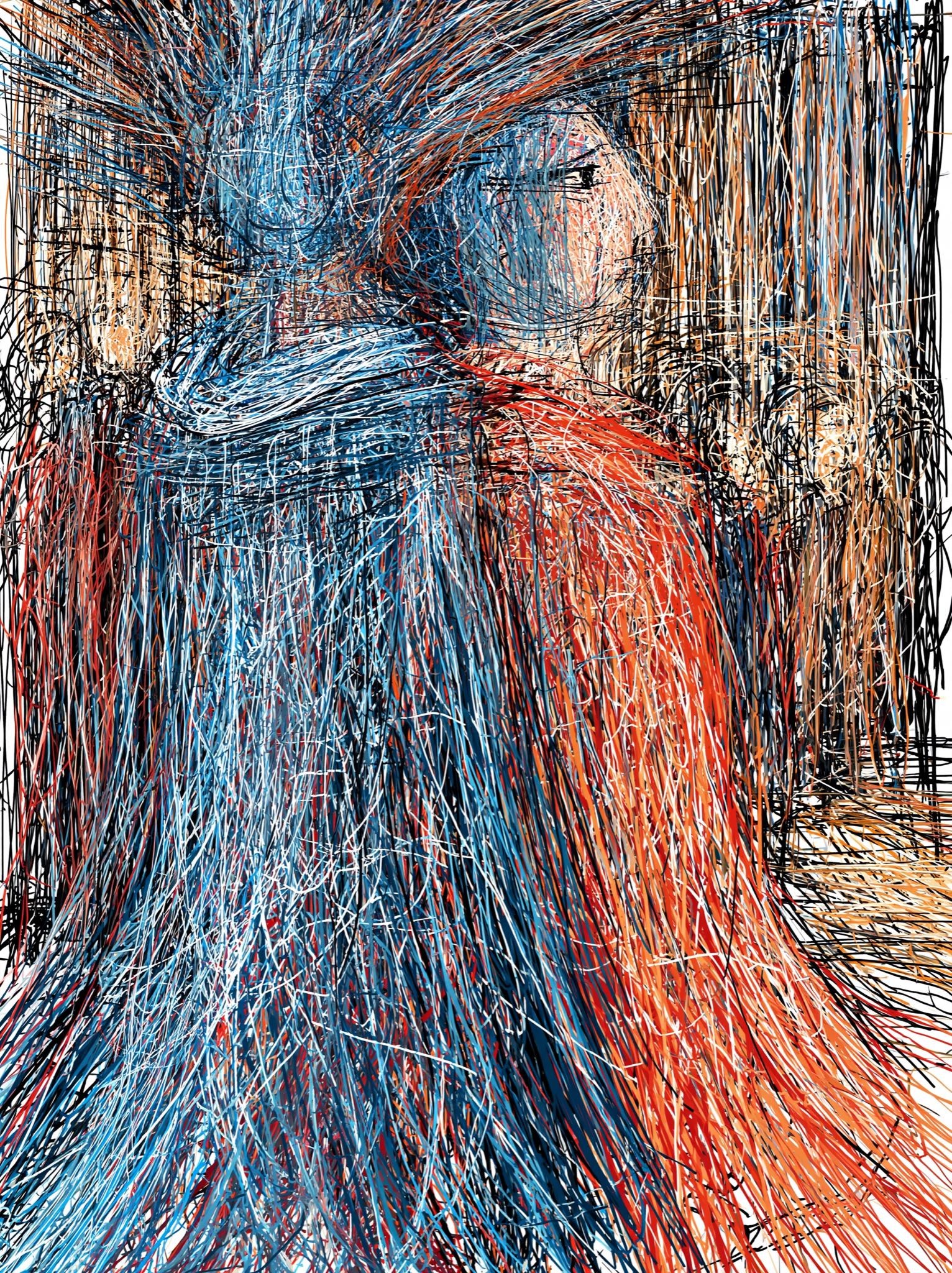
The Goncourt journal says "I" for forty-five years, and for the first nineteen of them the "I" was two men, one of whom held the pen while both dictated. Edmond’s preface of 1872 explains how that worked, what the brothers thought they were doing to the people they wrote about, and why the diary could only be published, in his lifetime, in part.
Orientation
At a Glance
- The claimEdmond and Jules de Goncourt began the journal on 2 December 1851, the day their first novel went on sale, and kept it together until Jules's last entry on 20 January 1870; Edmond
- What they thought they were doingThe preface is also a statement of method, and the method explains the journal's peculiar texture, which is closer to a reporter's notebook than to a diary of the soul:
- Why it could only come out in partThe preface was written in 1872 at Schliersee, in the Bavarian mountains, and was meant to sit in a drawer.
- What the survivor didEdmond tells the reader, without dwelling on it, what happened to the "dictation by two." After his brother's death he "regarded our literary work as finished" and resolved "to sea
The short answer is that Jules wrote it down and both of them said it. Edmond de Goncourt put the matter in one sentence when he came to explain the journal to its first readers: "The whole manuscript, so to speak, is written by my brother, under a dictation by two: our way of working for these memoirs." 1 The longer answer is in the rest of the preface, which is the fullest account either brother gave of what the diary was, and which was written by the survivor, two years after the partnership ended.
The Claim
Edmond and Jules de Goncourt began the journal on 2 December 1851, the day their first novel went on sale, and kept it together until Jules's last entry on 20 January 1870; Edmond then continued it alone until his own death in 1896. 2 For the joint years the preface makes a claim that no other diary in the language can make:
This journal is our confession of every evening: the confession of two lives unseparated in pleasure, in labour, in pain, of two twin thoughts, of two minds receiving from contact with men and things impressions so similar, so identical, so homogeneous, that this confession may be considered the expansion of a single me and a single I. 1
The italics are Edmond's, and so is the unusual wording. French has inséparable, which describes a bond; he writes inséparées, which describes a state, as if the lives had never been divided in the first place. The sentence then works through three nouns for the same thing, lives, thoughts, minds, and three adjectives for the same likeness, before arriving at the grammatical point: one moi, one je. It is a claim about persons made in the vocabulary of grammar, which is fitting for men whose whole life was sentences.
Whether it was true is another matter, and readers of the journal have doubted it. Jules was the younger by eight years, the quicker and more nervous, and the hand on the page; Edmond was the elder and, after 1870, the editor, who chose what the world would see. A "dictation by two" is still transcribed by one, and the preface is candid that the manuscript is in Jules's writing. What the sentence describes may be less a fact about two minds than an ideal the brothers held and worked at, in a household where they were together, by Edmond's later account, every day of their adult lives. 2 The journal was one of the instruments of that ideal. Sitting down each evening to agree on what had happened is a way of making two experiences into one.
What They Thought They Were Doing
The preface is also a statement of method, and the method explains the journal's peculiar texture, which is closer to a reporter's notebook than to a diary of the soul:
So our effort has been to try to bring our contemporaries back to life before posterity in their animated likeness, to bring them back to life by the ardent shorthand of a conversation, by the physiological surprise of a gesture, by those nothings of passion in which a personality reveals itself, by that I-know-not-what which gives the intensity of life, by the notation, in short, of a little of that fever which is the property of the heady existence of Paris. 1
"Shorthand" (sténographie) is the word to hold on to. The brothers went to dinners and salons, listened to Flaubert, Gautier, Sainte-Beuve and the rest, came home, and wrote down what had been said while it was still warm, with the gestures. They were not keeping a record of their inner lives, or not chiefly; they were taking down other people. That is why the journal is so often quoted by biographers of everyone but the Goncourts, and why it caused such offence when it appeared: the people in it had not known they were being transcribed.
Edmond anticipates the objection that the portraits are unstable. The brothers, he says, painted their subjects "in their likenesses of the day and the hour, taking them up again in the course of our journal, showing them again later under different aspects, and, as they changed and altered," refusing to imitate "the makers of memoirs who present their historical figures painted in one block and of a single piece, or painted with colours cooled by the distance," being "ambitious, in a word, to represent wavering humanity in its momentary truth." 1 A man who is charming in March and vicious in June appears both ways, and neither entry is corrected by the other.
Then comes a sentence that turns the method on its makers: "Sometimes even, I confess, does the change indicated in the people who were familiar or dear to us not come from the change that had taken place in ourselves? That is possible." 1 It is a small admission with a large consequence. If the portraits are of the hour, then the painters were of the hour too, and the single I that observes is as unstable as the people it observes. He leaves it at "that is possible" and moves on, which is how the journal itself treats most awkward truths.
Why It Could Only Come Out in Part
The preface was written in 1872 at Schliersee, in the Bavarian mountains, and was meant to sit in a drawer. "This journal was not to appear until twenty years after my death," Edmond writes in the note that accompanied the first printed volume; it was a settled resolution, until the novelist Alphonse Daudet, hearing pages read aloud, pressed him to publish extracts, and a mutual friend at the Figaro offered to print them. 1 What appeared in 1887, and in eight further volumes over the next nine years, was accordingly "the part that it is possible to deliver to publicity in my lifetime and in the lifetime of those I have studied and painted ad vivum." 1 Ad vivum: from the life, the phrase used of a portrait done with the sitter present.
Two things follow for anyone opening the journal now. The first is that the version Edmond published is a selection made with living people in view, and that the complete text, with the passages held back, did not appear until the 1950s, long after everyone in it was dead. 2 A reader of the 1887 volumes is reading what a careful survivor thought could be said. The second is that the disorder Edmond apologises for at the end of the preface, "the syntax at a venture, and the word without a passport," is a chosen disorder: the brothers "always preferred the phrase and the expression which least blunted and academised the quick of our sensations." 1 The journal is rough because polish would have cooled it, and cooling was the fault the method was designed to avoid.
What the Survivor Did
Edmond tells the reader, without dwelling on it, what happened to the "dictation by two." After his brother's death he "regarded our literary work as finished" and resolved "to seal the journal at the date of 20 January 1870, at the last lines traced by his hand." 1 He did not. The wish to set down the last months, and then the siege of Paris and the Commune, "drew me on to continue this journal, which is still, from time to time, the confidant of my thought." 1 From that date the I on the page is one man, writing alone in the evenings for twenty-six years, and the preface, written two years into that solitude, is the moment when he defines what the plural I had been.
The question this article began with has, then, a practical answer and a stranger one. Practically, two brothers kept one diary by sitting together each night and letting the younger write while both spoke. The stranger answer is that keeping the diary was part of what made them able to say "we" at all: the nightly act of agreeing on the day produced the single I that the preface describes, and when one of the two was gone the other found that the instrument still worked, and went on using it, on his own, as a confidant. Anyone who has kept a shared account of anything, a household, a project, a long friendship, and then had to keep it alone, will know something of what the change of hand cost. Edmond's preface is the record of a man deciding not to seal the book.
Source ApparatusNotes2 notes
- ↩
Edmond de Goncourt, "Préface" (dated Schliersee, August 1872) and the accompanying note, in Journal des Goncourt: Mémoires de la vie littéraire, vol. I, 1851-1861 (Paris: Charpentier, 1887). Public domain. French text consulted at Project Gutenberg, ebook no. 14799, [Project Gutenberg, ebook no. 14799](https://www.gutenberg.org/ebooks/14799) . Translated for this article. Key sentences in the original: "Ce journal est notre confession de chaque soir: la confession de deux vies inséparées dans le plaisir, le labeur, la peine, de deux pensées jumelles, de deux esprits recevant du contact des hommes et des choses des impressions si semblables, si identiques, si homogènes, que cette confession peut être considérée comme l'expansion d'un seul moi et d'un seul je."; "Le manuscrit tout entier, pour ainsi dire, est écrit par mon frère, sous une dictée à deux: notre mode de travail pour ces Mémoires."; "à les faire revivre par la sténographie ardente d'une conversation, par la surprise physiologique d'un geste"; "ambitieux, en un mot, de représenter l'ondoyante humanité dans sa vérité momentanée"; "Quelquefois même, je l'avoue, le changement indiqué chez les personnes qui nous furent familières ou chères ne vient-il pas du changement qui s'était fait en nous? Cela est possible."; "Ce journal ne devait paraître que vingt ans après ma mort."; "la partie qu'il est possible de livrer à la publicité de mon vivant et du vivant de ceux que j'ai étudiés et peints ad vivum"; "vaillent que vaillent la syntaxe au petit bonheur, et le mot qui n'a pas de passeport"; "je prenais la résolution de cacheter le journal à la date du 20 janvier 1870, aux dernières lignes tracées par sa main." The 1872 preface ends with Edmond’s full signature and the date “Schliersee, août 1872.” The statements about waiting twenty years after his death, Daudet’s encouragement, and publication during his lifetime appear in the separate statement that follows, signed “E. de G.”
- ↩
"Goncourt brothers," Wikipedia, [Goncourt brothers](https://en.wikipedia.org/wiki/Goncourt_brothers) : the journal begun in 1851, Jules's death in 1870, Edmond's continuation to 1896, "did not spend more than a day apart in their adult lives." For the nine-volume edition of 1887–96, Robert Ricatte’s edition (Monaco, 1956–58), and the Robert Laffont reissue, see the Société des amis des frères Goncourt, [bibliography](https://goncourt.org/bibliographie1851-1896.html).
Test your understanding
Question 1 of 3
According to the article, how did the brothers’ nightly writing practice help create the “single I” described by Edmond?
Guided Inquiry
Questions for Socrates
Explore these questions with Socrates, with this Feature as your reading context.
- If keeping the journal helped the brothers create the unity they described as a “single I,” should that unity be understood as an authentic identity, a consciously maintained ideal, or both? What in the article supports your view?→
- Edmond preferred portraits that showed people differently at different moments rather than as figures “painted in one block.” What kinds of truth can this method reveal, and what kinds might it obscure?→
- Edmond initially planned to seal the journal after Jules’s final entry but continued writing alone. In what sense did the journal remain the same instrument after the shared “dictation by two” had ended, and in what sense did it become something fundamentally different?→