
Fairy Tales
Did the Little Mermaid Want the Prince, or His Soul?
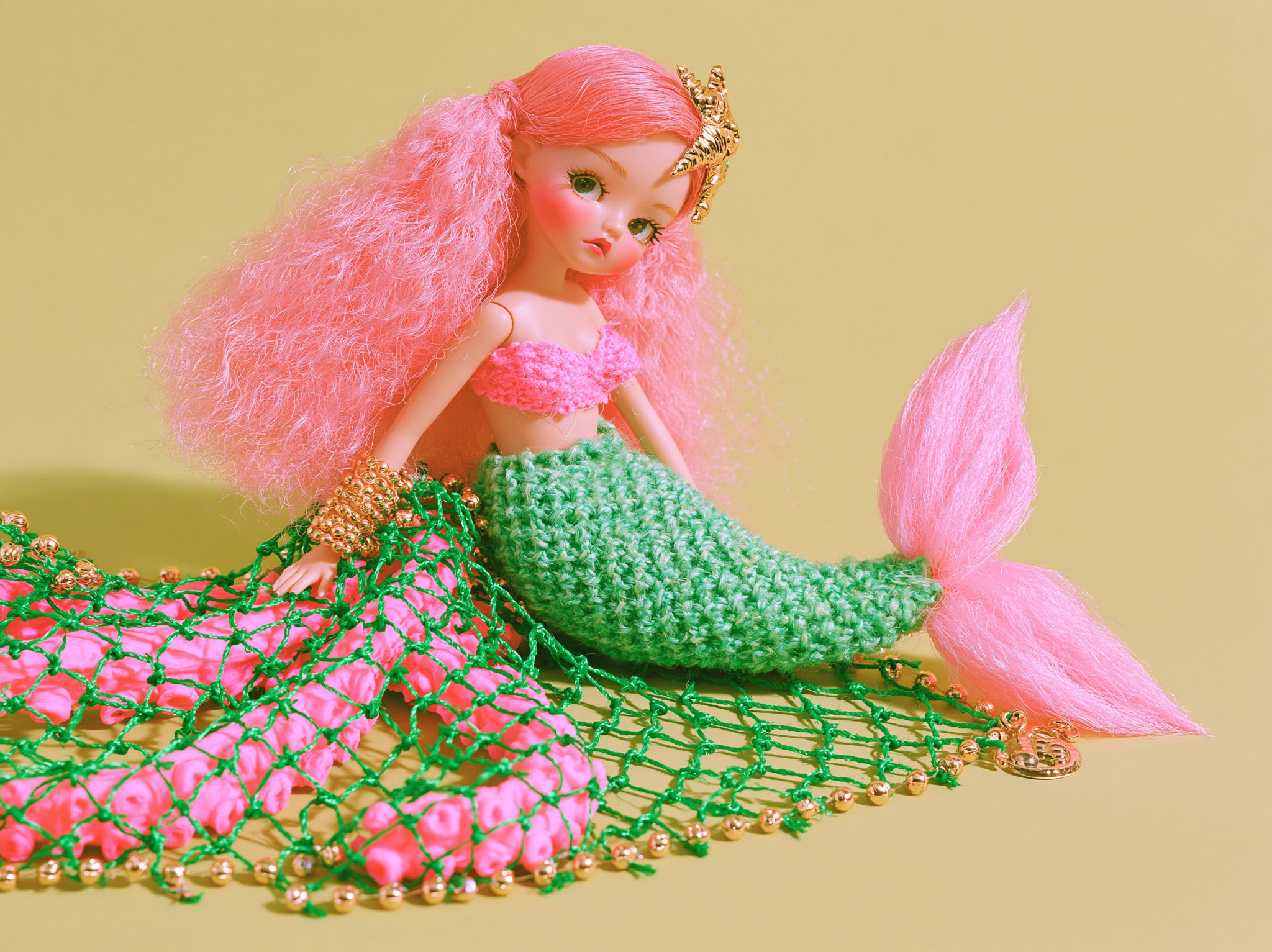
Everyone knows that Hans Christian Andersen's little mermaid gave up her voice for love of a prince, and that in his telling, unlike Disney's, she does not get him. Fewer readers notice that the tale gives her a second desire, an immortal soul, which she learns about from her grandmother and which the prince is only a way of getting. This explainer follows that second desire through the tale of 1837, back to the alchemist Paracelsus and the novella Undine that Andersen was writing against, and forward to the ending he chose instead, in which the mermaid becomes a creature of the air who must earn her soul by three hundred years of good deeds.
Orientation
At a Glance
- The route through a manThe grandmother gives the condition in the same breath.
- Andersen says noAndersen knew exactly what he was doing with that inheritance, because he said so.
- The other pathRead the ending with that in mind and it stops looking like a consolation prize.
- The catch at the endThe last paragraph is the one adults remember with irritation.
Andersen is quoted from the Victorian English version generally credited to Mrs H. P. Paull (1872), public domain, as printed without attribution in the UC Davis online anthology; Andersen's letter of 1837 is quoted in short phrases from the English given in two Wikipedia articles.
Halfway through "The Little Mermaid," after she has watched the prince's birthday party from the sea, saved him from the wreck, and laid him on the sand by a temple, the mermaid asks her grandmother a question that is not about him at all. "Why have not we an immortal soul?" she asks, "mournfully," and adds that she "would give gladly all the hundreds of years that I have to live, to be a human being only for one day." The grandmother has just explained the difference. "We sometimes live to three hundred years," she says, but at the end "we only become the foam on the surface of the water"; "We have not immortal souls, we shall never live again." "Human beings, on the contrary, have a soul which lives forever, lives after the body has been turned to dust."
So the tale's heroine has two desires, and the order in which they appear matters. She falls in love with the prince first. But it is the conversation with her grandmother that tells her what the prince could be for, and it is worth asking which of the two she is really after, because the answer the tale gives is not the one most readers carry away.
The Route Through a Man
The grandmother gives the condition in the same breath. There is no way for a mermaid to have a soul, she says, "unless a man were to love you so much that you were more to him than his father or mother," and unless "the priest placed his right hand in yours" at a wedding; "then his soul would glide into your body," and she would share in human happiness. "But this can never happen," because of the fish's tail, which on land is thought ugly. When the mermaid goes to the sea witch for legs, the witch restates the bargain from the other end: if he marries someone else, "the first morning after he marries another your heart will break, and you will become foam on the crest of the waves."
The doctrine has a source, and it is not Danish folklore. It is Paracelsus, the Swiss physician and alchemist, whose Book on Nymphs, Sylphs, Pygmies, and Salamanders was printed in 1566. For Paracelsus each element has its spirits, undines in water, sylphs in air, gnomes in earth, salamanders in fire, and the water spirits are like human beings in every way but one: they have no immortal soul. They can gain one by marrying a man, and their children are born with souls. Friedrich de la Motte Fouqué turned that passage into a novella, Undine (1811), the most popular German fairy tale of the Romantic age, in which a water spirit marries the knight Huldbrand, receives a soul at the wedding, and, when he is unfaithful, is bound by the law of her kind to kill him. Andersen's grandmother is reciting Paracelsus, by way of Fouqué.
Andersen Says No
Andersen knew exactly what he was doing with that inheritance, because he said so. In 1837, just after finishing the manuscript, he wrote to a friend that he had not, like Fouqué in Undine, made the mermaid's gaining of an immortal soul depend on a man's love, since that would "depend rather much on chance"; instead he had "permitted my mermaid to follow a more natural, more divine path." And the tale's working title tells the same story. He called it, while writing it, "Daughters of the Air."
That is the answer to the headline's question, as far as the author is concerned. The prince was never the point. He is the route the old doctrine offered, and the tale exists to show that route failing and another one opening. The mermaid wants the prince, and wants him sincerely; but the soul is the thing she would trade three hundred years for, and the ending Andersen planned from the beginning is about the soul.
The Other Path
Read the ending with that in mind and it stops looking like a consolation prize. The prince marries the princess from the temple, whom he takes for his rescuer. The mermaid's sisters, who have sold their hair to the witch, bring her a knife: if she kills him before sunrise and lets his blood fall on her feet, she will be a mermaid again and have her three hundred years. She flings the knife "far away from her into the waves," casts "one more lingering, half-fainting glance at the prince," throws herself into the sea, and feels that "her body was dissolving into foam." Then she does not die. She sees "hundreds of transparent beautiful beings" above her, and asks where she is. "Among the daughters of the air," one of them answers.
What the daughters tell her is the tale's real doctrine, and it is a correction of the grandmother's. "A mermaid has not an immortal soul, nor can she obtain one unless she wins the love of a human being," they say, repeating the old rule, and then they set beside it a new one: the daughters of the air have no souls either, but they "can, by their good deeds, procure one for themselves." "We fly to warm countries, and cool the sultry air that destroys mankind with the pestilence"; "We carry the perfume of the flowers to spread health and restoration." And: "After we have striven for three hundred years to all the good in our power, we receive an immortal soul." And they tell her why she has been admitted: "You, poor little mermaid, have tried with your whole heart to do as we are doing." She "lifted her glorified eyes towards the sun, and felt them, for the first time, filling with tears." Earlier, at a moment of grief, the tale had stopped to say that she was "ready to cry, only that the mermaids have no tears, and therefore they suffer more." The first sign of the soul is a tear.
So the mermaid exchanges one three hundred years for another. The sea's three hundred years ended in foam; the air's end in heaven, "After three hundred years, thus shall we float into the kingdom of heaven." The number is the same, and so is the creature; what has changed is the direction. And here the old doctrine helps after all, since an esoteric reader will see what Andersen has done with Paracelsus's scheme. A water spirit, an undine, who could have won a soul by marriage, has instead been changed into a spirit of the air, a sylph, who must earn one by work. She has not left the system of the elementals. She has moved up a floor in it. That is this explainer's observation rather than Andersen's, but the tale's own images, water, foam, air, sun, invite it.
The Catch at the End
The last paragraph is the one adults remember with irritation. The daughters of the air say they may reach heaven sooner: "Unseen we can enter the houses of men, where there are children," and "for every day on which we find a good child" who gives its parents joy, "our time of probation is shortened"; "The child does not know" when they pass through the room. But when they see a naughty child, they shed tears, "for every tear a day is added to our time of trial." P. L. Travers, the author of Mary Poppins, called this "blackmail," a moral with a catch in it, and it is hard to disagree: a story that has just shown a creature earn her place by giving up her own life turns, in its last lines, to frighten the listener into good behaviour.
Scholars have divided over whether the ending belongs to the tale or was bolted on. Bøggild and Heegaard read the turn from tragedy as deliberate ambiguity, a scepticism toward the very religious images it uses, while Baggesen and Massengale argue that the ending is the natural completion of the tale's religious structure. The working title favours the second view. Other readings look elsewhere. Maria Tatar reads the mermaid's metamorphoses as Andersen's own preoccupation with changing identity; Susan White reads the lost voice as a girl's hard passage into speech and social power; and Rictor Norton and Heinrich Detering read the whole tale as a love letter to Edvard Collin, the friend who married someone else in the year Andersen wrote it, which would make the silent watcher at the wedding the author himself. All of these are readings, and the page can bear each of them. None of them can remove the soul from the tale.
The Answer
Did the little mermaid want the prince, or his soul? Both, in the order the tale gives them: she loved the prince first, and learned afterward that he could give her what she wanted more. Andersen's achievement was to take the soul out of the prince's hands. In Paracelsus and in Fouqué a water spirit's eternity depends on a man's fidelity, which, as Andersen said, depends rather much on chance; in Andersen it depends on what she does, and what she does at the crucial moment is refuse to buy her old life with his. The Disney version, which lets her marry him, gives her the prince and quietly drops the soul. Andersen's gives her the soul, or the chance of one, and lets the prince go, and that is why his ending is not sad in the way readers remember. She weeps for the first time, and the tears are the proof.
Source ApparatusNotes1 note
- ↩
"The Little Mermaid" (Den lille Havfrue, 1837) is quoted from the English version printed without a translator's name in the UC Davis online anthology (stenzel.ucdavis.edu/180/anthology/mermaid.html), whose wording is that of the Victorian translation credited to Mrs H. P. Paull (1872). The publication details, the working title "Daughters of the Air," Andersen's 1837 letter ("depend rather much on chance"), P. L. Travers's "blackmail," and the readings of Bøggild and Heegaard, Baggesen, Massengale, Tatar, White, Norton, and Detering are from the Wikipedia article "The Little Mermaid," consulted 27 October 2026; the second phrase from the letter ("a more natural, more divine path") and the summary of Fouqué's Undine (1811) are from the article "Undine (novella)"; Paracelsus's doctrine of elementals and its route to Fouqué and Andersen are from the article "Undine," which cites the Sigerist translation of Paracelsus (1941) and Barbara Fass, "The Little Mermaid and the Artist's Quest for a Soul," Comparative Literature Studies 9 (1972). Recommended translations, in copyright: Jean Hersholt (1949), online at the Hans Christian Andersen Centre; Tiina Nunnally (Viking, 2004); Maria Tatar, The Annotated Hans Christian Andersen (Norton, 2008).
Test your understanding
Question 1 of 3
How do the daughters of the air revise the grandmother’s account of how a soulless being can gain immortality?
Guided Inquiry
Questions for Socrates
Explore these questions with Socrates, with this Feature as your reading context.
- If the mermaid sincerely wants both the prince and an immortal soul, what features of the story help us decide which desire ultimately governs her choices?→
- Does the mermaid’s refusal to kill the prince make the ending triumphant, tragic, or both? What assumptions about freedom and reward shape your answer?→
- How does the final warning about good and naughty children affect the tale’s emphasis on freely chosen good deeds: does it reinforce that theme or undermine it?→