
Diotimos Library · Renaissance Collection · English Edition
The Renaissance
Studies in Art and Poetry
Swipe or use the arrow keys.
English Edition · Branch 76 of 105
Winckelmann · Part 1
The Renaissance
p. 76Winckelmann
Goethe's fragments of art-criticism contain a few pages of strange pregnancy on the character of Winckelmann. He speaks of the teacher who had made his career possible, but whom he had never seen, as of an abstract type of culture, consummate, tranquil, withdrawn already into the region of ideals, yet retaining colour from the incidents of a passionate intellectual life. He classes him with certain works of art, possessing an inexhaustible gift of suggestion, to which criticism may return again and again with renewed freshness. Hegel, in his lectures on the Philosophy of Art, estimating the work of his predecessors, has also passed a remarkable judgment on Winckelmann's writings:—“Winckelmann, by contemplation of the ideal works of the ancients, received a sort of inspiration, through which he opened a new sense for the study of art. He is to be regarded as one of those who, in the sphere of art, have known how to initiate a new organ for the human spirit.” That it has given a new sense, that it has laid open a new organ, is the highest that can be said of any critical effort. It is interesting then to ask what kind of man it was who thus laid open a new organ. Under what conditions was that effected?
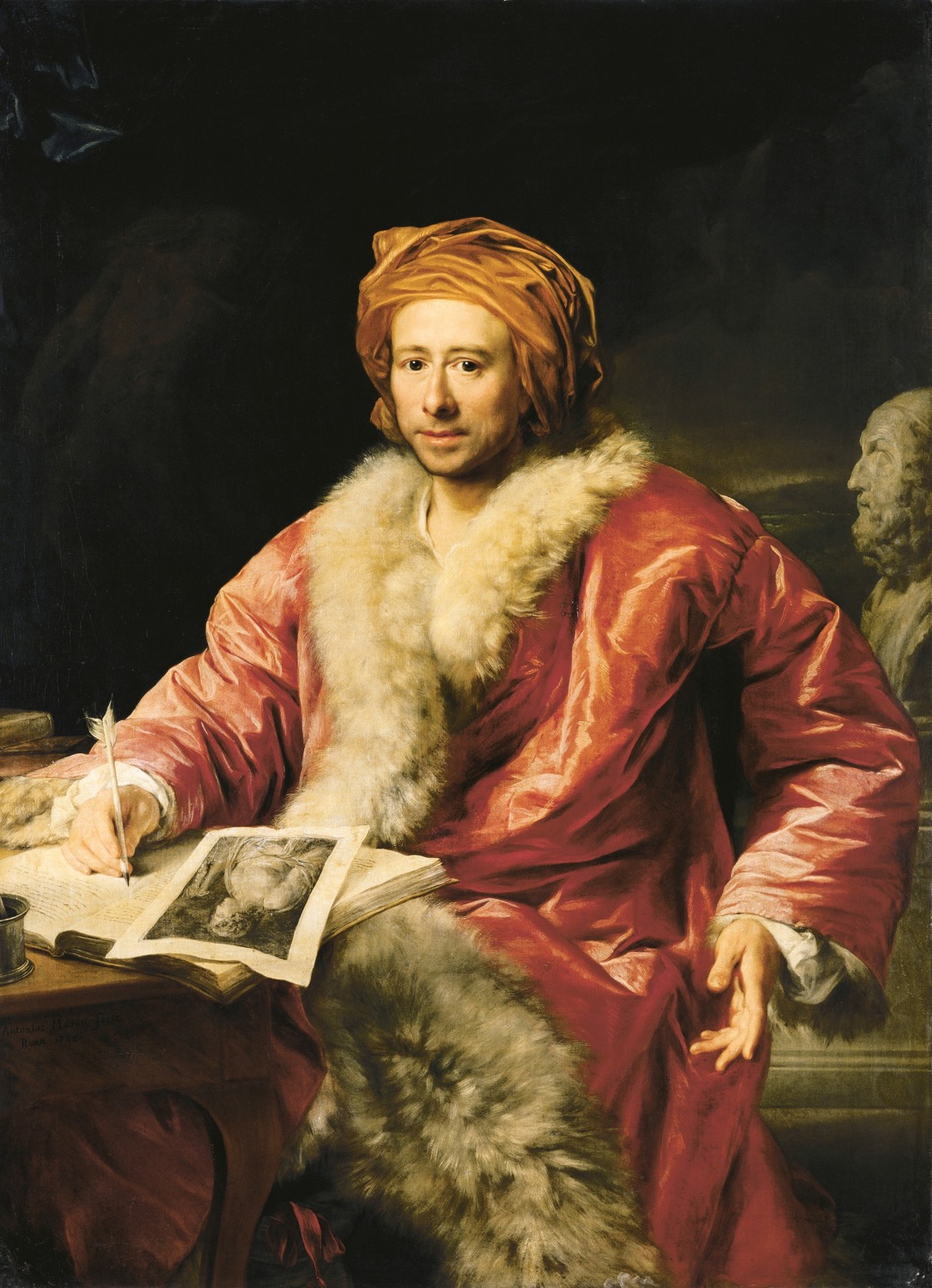
Anton von Maron, Johann Joachim Winckelmann, 1768, Klassik Stiftung Weimar. Collection record
About This Reading Edition
Walter Pater’s studies of art and poetry, from medieval French tales through Botticelli, Leonardo and Winckelmann. This illustrated and annotated edition follows the 1893 fourth edition and includes the original Conclusion of 1873.
Historical Text
Walter Pater, The Renaissance: Studies in Art and Poetry, fourth edition (Macmillan, 1893), with the Conclusion from Studies in the History of the Renaissance (Macmillan, 1873).
About This Edition
Macmillan, fourth edition, 1893; original Conclusion, 1873; Diotimos Editions, 2026
Rights
Walter Pater’s historical text and the five supplied reproductions are in the public domain. Introduction, notes and apparatus © 2026 Diotimos Editions.
- Exact supplied originalComplete annotated edition (PDF)
- Exact supplied originalComplete annotated edition (EPUB)
- Exact supplied originalComplete annotated edition (Word)
- Exact supplied originalComplete annotated edition (Markdown)
- Historical copy-text printingPater’s 1893 fourth edition
- Original Conclusion copy text1873 first edition, facsimile of the Conclusion
- Historical edition chronologyInternational Walter Pater Society chronology