
Diotimos Library · Renaissance Collection · English Edition
The Renaissance
Studies in Art and Poetry
Swipe or use the arrow keys.
English Edition · Branch 63 of 105
The School of Giorgione · Part 6
The Renaissance
p. 63And, as we might expect, something fabulous and illusive has always mingled itself in the brilliancy of Giorgione's fame. The exact relationship to him of many works—drawings, portraits, painted idylls—often fascinating enough, which in various collections went by his name, was from the first uncertain. Still, six or eight famous pictures at Dresden, Florence and the Louvre, were with no doubt attributed to him, and in these, if anywhere, something of the splendour of the old Venetian humanity seemed to have been preserved. But of those six or eight famous pictures it is now known that only one is certainly from Giorgione's hand. The accomplished science of the subject has come at last, and, as in other instances, has not made the past more real for us, but assured us only that we possess less of it than we seemed to possess. Much of the work on which Giorgione's immediate fame depended, work done for instantaneous effect, in all probability passed away almost within his own age, like the frescoes on the façade of the fondaco dei Tedeschi at Venice, some crimson traces of which, however, still give a strange additional touch of splendour to the scene of the Rialto. And then there is a barrier or borderland, a period about the middle of the sixteenth century, in passing through which the tradition miscarries, and the true outlines of Giorgione's work and person are obscured. It became fashionable for wealthy lovers of art, with no critical standard of authenticity, to collect so-called works of Giorgione, and a multitude of imitations came into circulation. And now, in the “new Vasari,” the great traditional reputation, woven with so profuse demand on men's admiration, has been scrutinised thread by thread; and what remains of the most vivid and stimulating of Venetian masters, a live flame, as it seemed, in those old shadowy times, has been reduced almost to a name by his most recent critics.
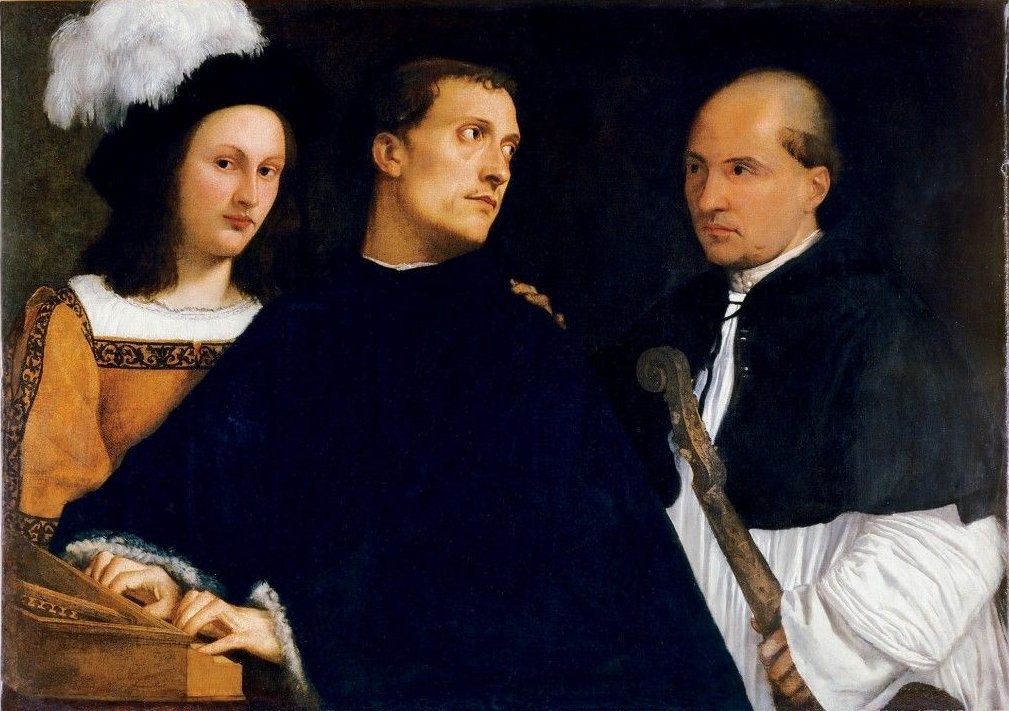
Titian, The Concert, c. 1510, Pitti Palace, Florence. Pater follows the earlier attribution to Giorgione. The Uffizi identifies the picture as an early Titian with clear Giorgione influence. Collection record
About This Reading Edition
Walter Pater’s studies of art and poetry, from medieval French tales through Botticelli, Leonardo and Winckelmann. This illustrated and annotated edition follows the 1893 fourth edition and includes the original Conclusion of 1873.
Historical Text
Walter Pater, The Renaissance: Studies in Art and Poetry, fourth edition (Macmillan, 1893), with the Conclusion from Studies in the History of the Renaissance (Macmillan, 1873).
About This Edition
Macmillan, fourth edition, 1893; original Conclusion, 1873; Diotimos Editions, 2026
Rights
Walter Pater’s historical text and the five supplied reproductions are in the public domain. Introduction, notes and apparatus © 2026 Diotimos Editions.
- Exact supplied originalComplete annotated edition (PDF)
- Exact supplied originalComplete annotated edition (EPUB)
- Exact supplied originalComplete annotated edition (Word)
- Exact supplied originalComplete annotated edition (Markdown)
- Historical copy-text printingPater’s 1893 fourth edition
- Original Conclusion copy text1873 first edition, facsimile of the Conclusion
- Historical edition chronologyInternational Walter Pater Society chronology