
Diotimos Library · Renaissance Collection · English Edition
The Renaissance
Studies in Art and Poetry
Swipe or use the arrow keys.
English Edition · Branch 55 of 105
Leonardo da Vinci · Part 10
The Renaissance
p. 55La Gioconda is, in the truest sense, Leonardo's masterpiece, the revealing instance of his mode of thought and work. In suggestiveness, only the Melancholia of Dürer is comparable to it; and no crude symbolism disturbs the effect of its subdued and graceful mystery. We all know the face and hands of the figure, set in its marble chair, in that circle of fantastic rocks, as in some faint light under sea. Perhaps of all ancient pictures time has chilled it least. As often happens with works in which invention seems to reach its limit, there is an element in it given to, not invented by, the master. In that inestimable folio of drawings, once in the possession of Vasari, were certain designs by Verrocchio, faces of such impressive beauty that Leonardo in his boyhood copied them many times. It is hard not to connect with these designs of the elder, by-past master, as with its germinal principle, the unfathomable smile, always with a touch of something sinister in it, which plays over all Leonardo's work. Besides, the picture is a portrait. From childhood we see this image defining itself on the fabric of his dreams; and but for express historical testimony, we might fancy that this was but his ideal lady, embodied and beheld at last. What was the relationship of a living Florentine to this creature of his thought? By what strange affinities had the dream and the person grown up thus apart, and yet so closely together? Present from the first incorporeally in Leonardo's brain, dimly traced in the designs of Verrocchio, she is found present at last in Il Giocondo's house. That there is much of mere portraiture in the picture is attested by the legend that by artificial means, the presence of mimes and flute-players, that subtle expression was protracted on the face. Again, was it in four years and by renewed labour never really completed, or in four months and as by stroke of magic, that the image was projected?
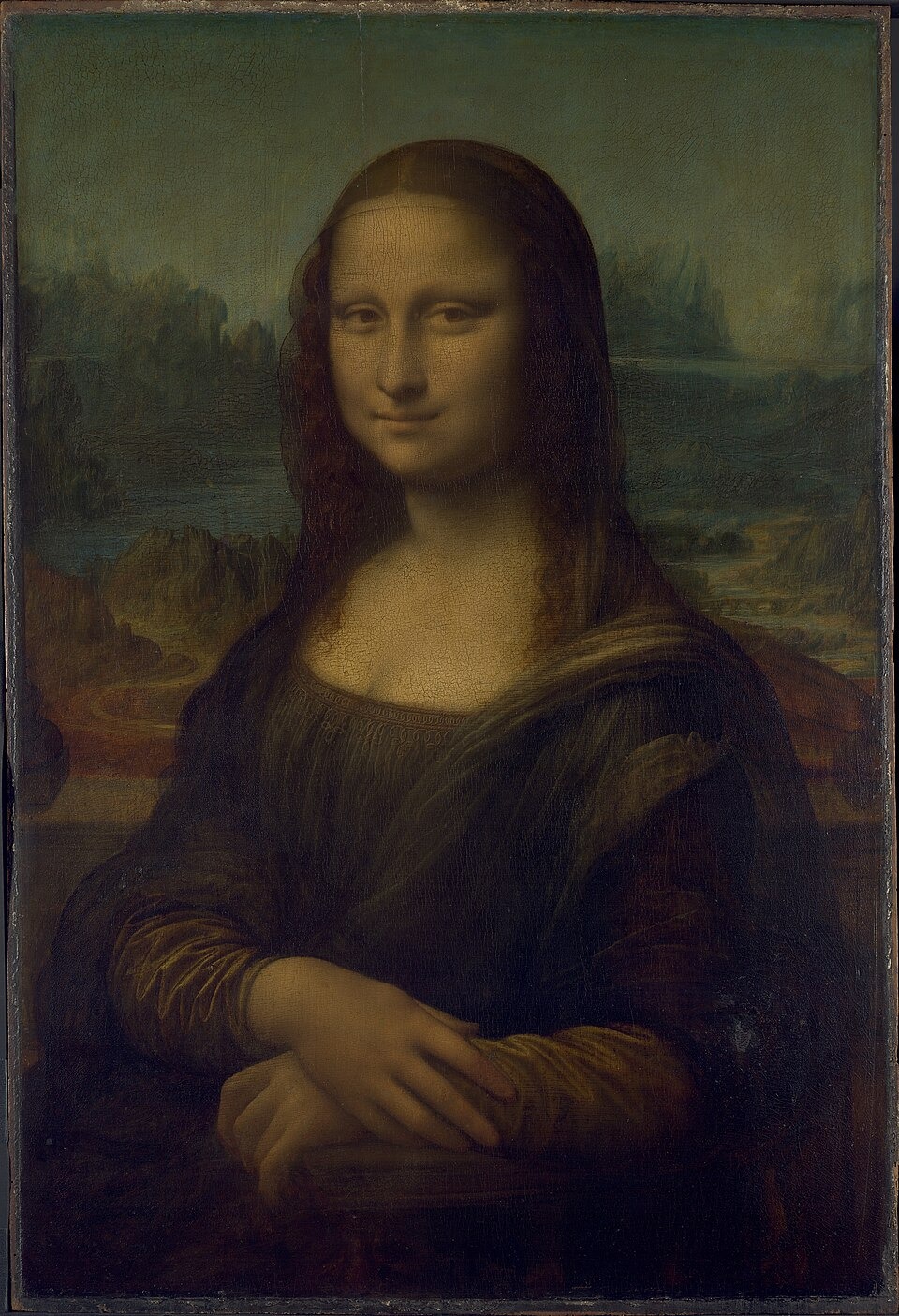
Leonardo da Vinci, Mona Lisa, Musée du Louvre, Paris. Collection record
About This Reading Edition
Walter Pater’s studies of art and poetry, from medieval French tales through Botticelli, Leonardo and Winckelmann. This illustrated and annotated edition follows the 1893 fourth edition and includes the original Conclusion of 1873.
Historical Text
Walter Pater, The Renaissance: Studies in Art and Poetry, fourth edition (Macmillan, 1893), with the Conclusion from Studies in the History of the Renaissance (Macmillan, 1873).
About This Edition
Macmillan, fourth edition, 1893; original Conclusion, 1873; Diotimos Editions, 2026
Rights
Walter Pater’s historical text and the five supplied reproductions are in the public domain. Introduction, notes and apparatus © 2026 Diotimos Editions.
- Exact supplied originalComplete annotated edition (PDF)
- Exact supplied originalComplete annotated edition (EPUB)
- Exact supplied originalComplete annotated edition (Word)
- Exact supplied originalComplete annotated edition (Markdown)
- Historical copy-text printingPater’s 1893 fourth edition
- Original Conclusion copy text1873 first edition, facsimile of the Conclusion
- Historical edition chronologyInternational Walter Pater Society chronology