
Diotimos Library · Journals, Notebooks & Fragments Collection · Bilingual Edition
The Notebooks of Joseph Joubert, Volume I
Complete Notebooks · French with an independent English translation.
Explore the LexiconSwipe or use the arrow keys.
French Page · Branch 1457 of 3781
YEAR 1799 · Entry 1457
French
p. 291320 novembre. mardi. Sᵗ Edmond; vigile.
— En songe. — Explication de l’origine des principes géométriques.
Le cercle, qui est la plus belle des figures, est sans doute aussi la première qui a occupé l’attention de l’esprit humain. On l’a considéré en se jouant. On a tracé dedans des figures régulières et d’abord on l’a partagé  On a redoublé le partage, on l’a quarré 
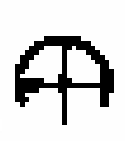 Voilà le diamètre et quatre angles. Doublez-les 
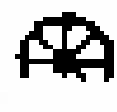 , vous en aurez huit. Les quatre premiers étoient droits et les huit premiers sont aigus. On donne aux angles droits quatre-vingt-dix degrés de valeur, quarante-cinq aux angles aigus. La raison en est qu’on avoit assigné à la circonférence du cercle une valeur de trois cent-soixante degrés et que les angles droits en occupent le quart, comme les aigus le huitième. Jusques là tout est expliqué. Mais voici ce qui m’embarrasse : c’est de scavoir pourquoi on a assigné trois cent-soixante degrés à la circonférence du cercle. — En ce moment il me vint sur ce point une clarté, et la voici. Les anciens disoient que le ciel avoit appris le nombre aux hommes. C’est par la nuit et par le jour (ajoutoient-ils) que nos pères eurent d’abord la pensée du un et du deux. Entrons dans cette idée et suivons-la. L’année a trois cent soixante-trois ou quatre jours, c’est-à-dire qu’il faut au soleil pour revenir au même point du ciel trois cent soixante quatre jours. Les anciens, comme plusieurs scavans l’ont observé, ne comptoient que par nombres ronds. Ils disoient donc trois cent soixante. Ne seroit-ce donc pas ce nombre de trois cent soixante compris dans le grand cercle de l’aneau (annus) que nous appellons an ou année, ne seroit-ce pas dis-je par le nombre des jours de chaque année et à son imitation que nous aurions anciennement assigné à tout cercle le nombre invariable de trois cent soixante degrés?
Au réveil. — Il s’ensuit de là que les quatre saisons sont les quatre angles de l’anneau. Chaque saison a autant de jours que l’angle droit a de degrés, quatre-vingt-dix. Il y a dans l’an huit angles aigus ou huit divisions de quarante-cinq jours, en divisant chaque saison en deux parts dont chacune seroit de trois quinzaines ou quarante-cinq jours. (On omet les plus et les moins qui sont fractions.)
The Notebooks of Joseph Joubert, Volume I: YEAR 1799
p. 2914Tuesday, November 20. St. Edmond; vigil.
— In a dream. — Explanation of the origin of geometric principles.
The circle, which is the most beautiful of figures, is doubtless also the first to engage the attention of the human mind. It was considered in play. Regular figures were drawn inside it, and first it was divided  The division was doubled, it was quartered  There are the diameter and four angles. Double them , and you will have eight. The first four were right angles, and the first eight are acute. Right angles are given a value of ninety degrees, acute angles forty-five. The reason is that the circle’s circumference had been assigned a value of three hundred and sixty degrees, and right angles occupy a quarter of it, as acute angles do an eighth. So far everything is explained. But here is what troubles me: why three hundred and sixty degrees were assigned to the circumference of the circle. — At this moment a light came to me on this point, and here it is. The ancients said that heaven had taught number to men. It was through night and day (they added) that our fathers first conceived one and two. Let us enter this idea and follow it. The year has three hundred and sixty-three or four days, that is, the sun takes three hundred and sixty-four days to return to the same point in the sky. The ancients, as several learned men have observed, counted only in round numbers. So they said three hundred and sixty. Would it not then be this number of three hundred and sixty contained in the great circle of the ring (annus) that we call an or année; would it not, I say, be by the number of days in each year and in imitation of it that we would once have assigned to every circle the unvarying number of three hundred and sixty degrees?
On waking. — It follows that the four seasons are the four angles of the ring. Each season has as many days as a right angle has degrees, ninety. There are eight acute angles in the year, or eight divisions of forty-five days, if each season is divided into two parts, each of which would be three periods of fifteen days, or forty-five days. (The pluses and minuses, which are fractions, are omitted.)
Socrates
Reading The Notebooks of Joseph Joubert, Volume I · YEAR 1799 · Entry 1457
Ask about a concept, passage, contradiction, or connection.
Socrates will begin with this book and its sources.About This Reading Edition
Joubert’s notebooks return to the work of thinking and writing, the demands of friendship, and questions of faith, beauty and conduct. This edition pairs the French with a new English translation, preserving the order of the chosen source and the unfinished character of its fragments. Dates and source references allow readers to follow a thought through time or return to its printed context.
Historical Text and Translation
The French text follows André Beaunier’s 1938 edition of Les Carnets de Joseph Joubert, published by Gallimard from Joubert’s autograph manuscripts. Volume I presents the entries on printed pages 32–475. French and English are aligned paragraph by paragraph, retaining the source order, printed dates and page references so readers can return to the facsimile.
About Diotimos Editions
Diotimos Editions prepared this new English translation directly from the French, preserving Joubert’s distinctions, recurring images, ambiguities and unfinished thoughts. Translator’s notes clarify wording, references and uncertain readings: Essential keeps notes that help explain a passage, while All includes technical detail. Annotations from the 1938 source edition remain distinct from the new translator’s notes.
Rights
The linked facsimile records identify the French source as public domain in the United States. The new English translation and editorial notes are © 2026 Diotimos, with source annotations and new editorial contributions credited separately. This edition pairs the complete French notebooks with an independent English translation, preserving the distinction between Joubert’s text and its accompanying notes.