Tap the page, move to the top or bottom edge, swipe down, or press Tab to reveal reading controls. Use the arrow keys or swipe sideways to turn pages.
November 12.
To attach one’s thoughts to passing events that carry them away with them is to engrave on sand, write on waves, and build on the wing of the winds.
November 14.
On the style fitted only to express action, movement, postures, and what may be called configuration. Similar in this to sculpture.
It is not so much the likeness as the essence of our thoughts, their juice, their extract, their virtue, that should enter our speech.
People were not then governed by wise men, but they were governed by wisdom:
November 17.
The soul has, as it were, several tunics, among which there is one it never lays aside.
This bony style...
They had grown accustomed to expressing themselves and understanding one another on these matters through terms taken from the science of lines and numbers. Imperceptibly they came to believe that this language, which had become habitual to them, was truly an indispensable necessity. Finally, confusing the figure with truth and words with things, they attributed to numbers and lines the properties they designated...
The ancients said that number had never done any harm. The present age has proved them wrong.
To coin wisdom. To strike it into maxims, proverbs, sayings easy to retain and transmit.
Tuesday, November 20. St. Edmond; vigil.
— In a dream. — Explanation of the origin of geometric principles.
The circle, which is the most beautiful of figures, is doubtless also the first to engage the attention of the human mind. It was considered in play. Regular figures were drawn inside it, and first it was divided  The division was doubled, it was quartered 
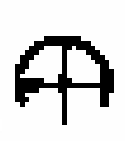 There are the diameter and four angles. Double them 
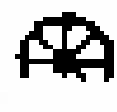 , and you will have eight. The first four were right angles, and the first eight are acute. Right angles are given a value of ninety degrees, acute angles forty-five. The reason is that the circle’s circumference had been assigned a value of three hundred and sixty degrees, and right angles occupy a quarter of it, as acute angles do an eighth. So far everything is explained. But here is what troubles me: why three hundred and sixty degrees were assigned to the circumference of the circle. — At this moment a light came to me on this point, and here it is. The ancients said that heaven had taught number to men. It was through night and day (they added) that our fathers first conceived one and two. Let us enter this idea and follow it. The year has three hundred and sixty-three or four days, that is, the sun takes three hundred and sixty-four days to return to the same point in the sky. The ancients, as several learned men have observed, counted only in round numbers. So they said three hundred and sixty. Would it not then be this number of three hundred and sixty contained in the great circle of the ring (annus) that we call an or année; would it not, I say, be by the number of days in each year and in imitation of it that we would once have assigned to every circle the unvarying number of three hundred and sixty degrees?
On waking. — It follows that the four seasons are the four angles of the ring. Each season has as many days as a right angle has degrees, ninety. There are eight acute angles in the year, or eight divisions of forty-five days, if each season is divided into two parts, each of which would be three periods of fifteen days, or forty-five days. (The pluses and minuses, which are fractions, are omitted.)
Music must also have taught number to men.
November 21.
An analysis for destroying, but rarely for establishing. As one separates the sticks of which a bundle is made to break it more easily. (On horseback.)