
Theaetetus (176E-177B)
Photos
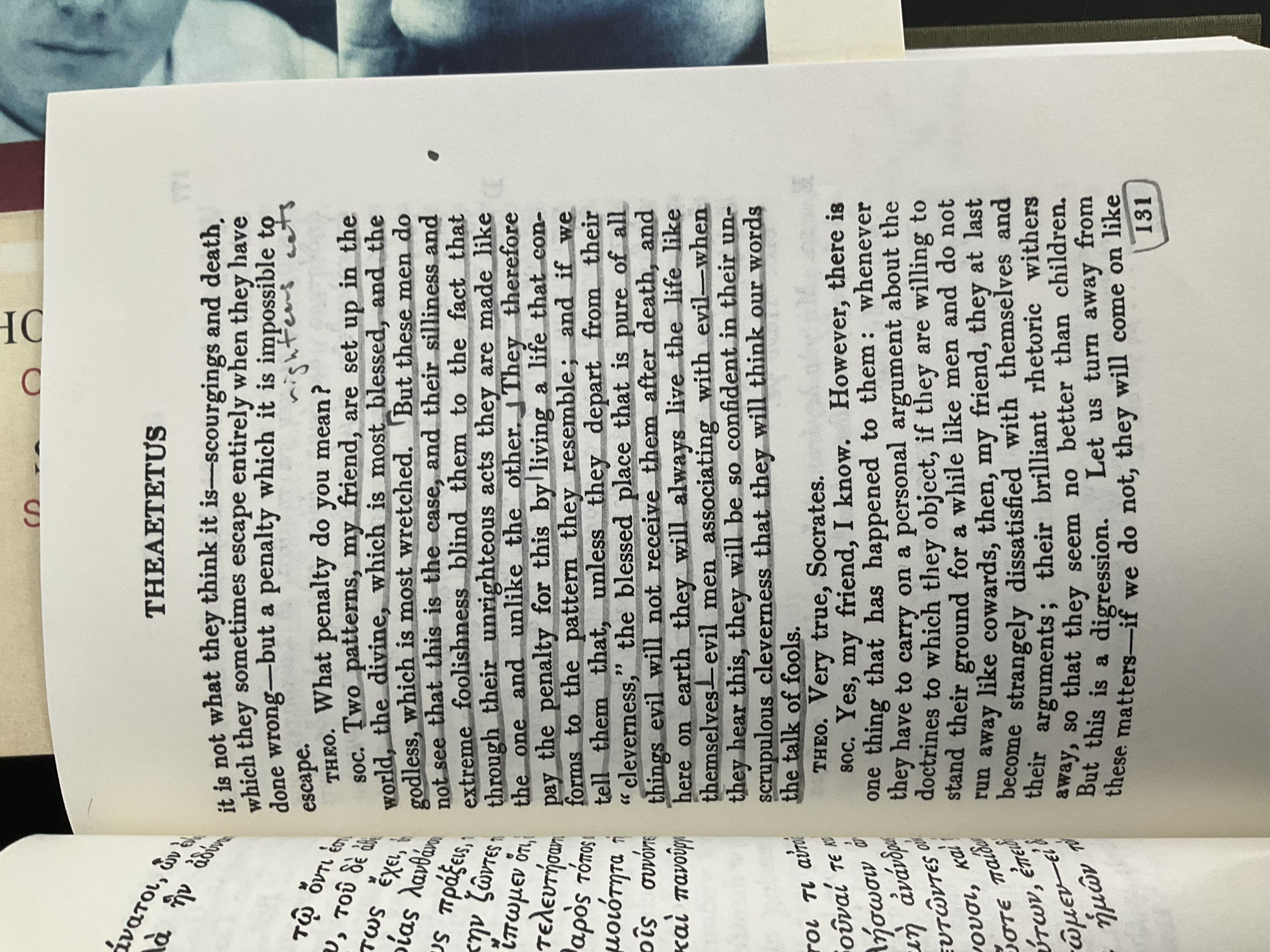
Enlarge the photographed page to inspect it in detail.
Summary
Socrates argues that wrongdoing carries an unavoidable penalty not reducible to scourging or death: unjust people assimilate themselves to the godless and wretched pattern of life rather than to the blessed divine one. In his account, foolishness prevents such people from recognizing that their unrighteous acts make them resemble the worse of these two patterns, so their punishment consists in living among evils and people like themselves and, unless they abandon their unscrupulous “cleverness,” being excluded after death from the blessed place that is pure of evil. Socrates adds that they initially dismiss this warning as foolish talk, yet when compelled to defend their doctrines in sustained personal argument rather than escape through rhetorical maneuvering, they eventually become dissatisfied with themselves, their eloquence withers, and they appear no better than children. He then identifies this line of thought as a digression and begins to turn back to the main argument, which continues beyond the visible page.
Highlights
- Two patterns, my friend, are set up in the world, the divine, which is most blessed, and the godless, which is most wretched. But these men do not see that this is the case, and their silliness and extreme foolishness blind them to the fact that through their unrighteous acts they are made like the one and unlike the other. They therefore pay the penalty for this by living a life that con- forms to the pattern they resemble; and if we tell them that, unless they depart from their “cleverness,” the blessed place that is pure of all things evil will not receive them after death, and here on earth they will always live the life like themselves—evil men associating with evil—when they hear this, they will be so confident in their un- scrupulous cleverness that they will think our words the talk of fools.
Notes
There appears to be a hierarchy of divinely ordered figures: God, identified with the Form of the Good; the gods; philosopher-kings, understood as statesmen who have withdrawn from active rule; rulers or lawgivers; guardians, including the auxiliary guardians; and, finally, the ordinary human subject.